
Review · JAPAN WATERFALL TOURS
Get to know Minoo from Osaka. Katsuoji Temple, Ryuanji Waterfall and Ryuanji Temple
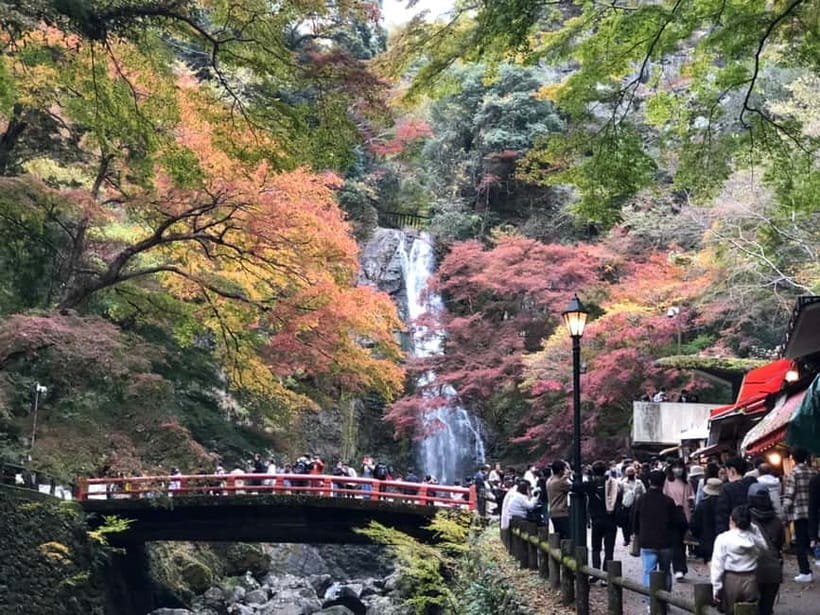
Katsuoji Temple is the star here: a mountain sanctuary filled with thousands of red darumas, quiet gardens, and small wishes written into Japanese religious tradition. The day then shifts from spiritual Japan to the forest path and broad drop of Minoo Falls, one of Osaka’s best breaks from city streets.
I like the small group of no more than seven, which gives the Spanish-speaking guide room to explain details and help with photos. I also like the local touch of momiji tempura, a maple-leaf snack associated with Minoo. The main consideration is cost: at $76, you still pay for transport and lunch, and punctuality matters because the bus and train connections are limited.
Key points at a glance
- Thousands of darumas at Katsuoji: Learn why these round figures represent determination, goals, and success.
- A forest route to Minoo Falls: Trade Osaka’s towers and shopping streets for a wooded walk ending at a dramatic waterfall.
- Spanish guidance in a group of seven or fewer: Expect a more personal pace than on a large coach outing.
- Momiji tempura on the way: Try a local Minoo specialty rather than relying only on standard Japanese snacks.
- Transport is separate: Bring an ICOCA, SUICA, or PASMO card, or allow time to get one before departure.
- A real half-day commitment: The six-hour schedule includes temple time, walking, buses, trains, and the return to HEP FIVE.
Why Katsuoji Temple is the heart of the day
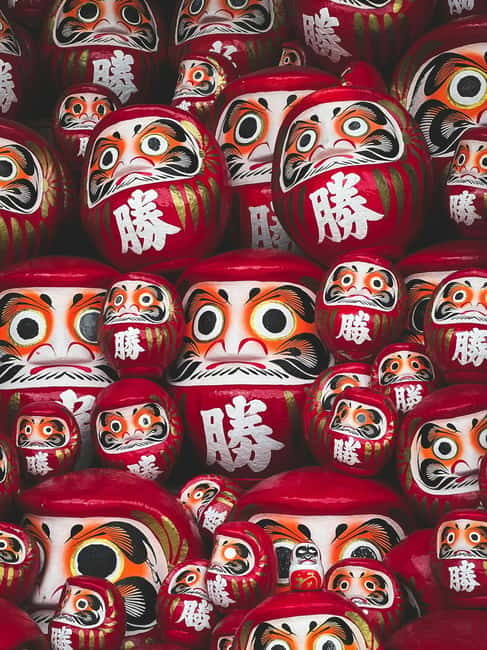
Katsuoji, often called the Temple of Victory, does not feel like a quick city shrine stop. It sits among mountains, with gardens, paths, religious buildings, and darumas appearing in surprising corners. The red figures are the visual signature of the visit, but the useful part of the tour is learning what they mean.
A daruma is a round, hollow figure traditionally linked with perseverance and the pursuit of a goal. You will see them in many sizes, often with intense eyes and determined expressions. The setting gives the custom more meaning than a souvenir shop explanation could. You are not just looking at rows of figures. You are seeing how a wish or ambition becomes part of a religious visit.
The temple grounds are scheduled for about two hours and 15 minutes, enough time to walk, listen, take pictures, and notice smaller details. That length is important. Katsuoji is not best handled as a rushed photo stop, especially if you want to understand the symbols rather than simply count the darumas.
The guide can also help you take part in small temple activities. One visitor from Germany described receiving help with a postcard activity and said the guide even prepared a postcard for a friend who could not attend. That points to the sort of thoughtful detail that can make a short cultural visit feel personal.
You should dress for walking and changing weather. The grounds are in a mountain setting, and the day continues on foot afterward. Comfortable shoes are not optional decoration here. They are the difference between enjoying the forest route and watching the clock.
More Waterfall Tours in Japan:
- Nikko: Kegon Falls, Lake Chuzenji & Toshogu Temple
★ 4.6 · 1,577 reviews - Tokyo: Nikko Toshogu Shrine and Kegon Waterfall Tour
★ 4.5 · 1,266 reviews - Nikko, Kegon Waterfall & Chuzenji Lake from Tokyo
★ 5.0 · 1,240 reviews
What the darumas add to the visit
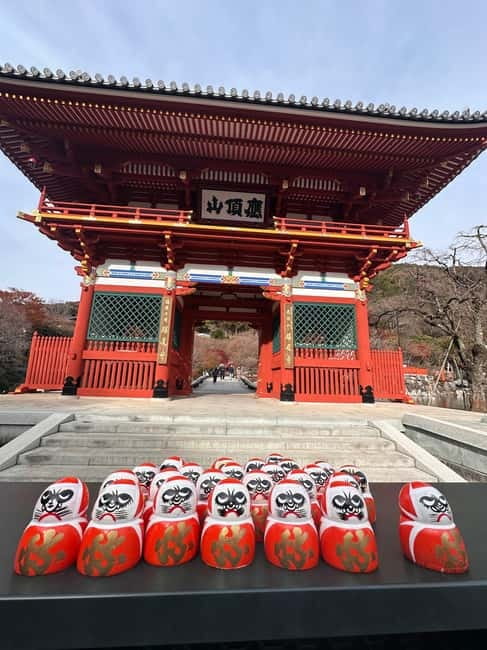
The daruma display gives this tour a clear cultural focus. Osaka offers plenty of major sights, but a temple filled with goal figures creates a different kind of experience. You get a visual introduction to Japanese religious practice without needing to visit a museum first.
The guide’s role matters because the figures can otherwise seem like a colorful collection of lucky dolls. A good explanation connects the custom to personal effort, hope, and the idea of keeping your attention on a goal. Several comments about the tour praise the explanations as interesting, clear, and easy to follow.
The Spanish language is a major advantage if that is your preferred language. The group has also worked for people who are not fluent in Spanish. Manuel, named by several participants, reportedly checked that everyone understood and used English when needed. Albert is also associated with the guiding team. Since the assigned guide can vary, treat those names as useful context rather than a guarantee.
Photography is another strong point. The guides have been praised for helping with photos, and that is useful at a place where the red darumas, gardens, and mountain setting invite plenty of pictures. Still, keep the camera from taking over. Katsuoji rewards a slower look at the small arrangements and quiet corners.
From HEP FIVE to the mountain temples
The meeting point is at the main gate of HEP FIVE shopping mall in Osaka. The guide confirms the exact point with the group one day before the outing. This is a practical arrangement, but you should not arrive at the last minute. The day depends on public transport, and the schedule allows little room for a missed connection.
The first leg takes about 20 minutes by subway or metro. A bus ride of roughly 30 minutes follows, bringing you toward Katsuoji. Transport is not included in the $76 price, so keep cash or a loaded transport card ready.
An ICOCA, SUICA, or PASMO card is especially useful. The bus to Katsuoji requires a transport card, and the guide can help you obtain one if you do not have one. You will also use public transport later in the day, so sorting this out before the meeting time will make the morning easier.
This part of the schedule may feel less polished than a private car tour. You share buses and trains, follow a fixed timetable, and need to stay with the group. The benefit is that you reach the temples without paying for a private vehicle, and you experience the same public transport system used by local residents.
The walk to Minoo Falls
After Katsuoji, the day moves back toward nature and the Minoo area. The waterfall visit takes about two hours, including the guided walk and time at the falls. The route gives you a clear change of pace: temple gardens and darumas first, then trees, water, and a forest path.
Minoo Falls is known as one of Osaka’s most famous waterfalls, and the tour presents it as a peaceful break from the city. You can expect time to stop, take pictures, and enjoy the sound and height of the falling water. The walk is not presented as a difficult mountain hike, but it is still a walking route, so sensible footwear and water matter.
The path is also part of the attraction. You are not simply driven to a lookout, photographed, and taken away. The route lets you see the area around the waterfall and gives the second half of the day a more natural feel.
The tour also connects the waterfall with Ryu-anji Temple, historically linked with Minoo Falls. The supplied schedule gives the main guided time to Minoo Falls, while the title and description connect the outing with Ryu-anji. If visiting the temple itself is essential to your plans, confirm the exact stop with the guide before booking, since the detailed timing lists Katsuoji and Minoo Falls most clearly.
Same region, a different set of falls:
- Osaka: Minoh, Katsuoji Temple, & Minoh Falls Full-day Tour
★ 4.9 · 172 reviews - From Osaka/Kyoto:Mount Koya, Wakayama & Nachi Waterfall Trip
★ 4.2 · 30 reviews - Osaka: Minoh Waterfall & Katsuo-ji Temple Half-Day Tour
★ 4.7 · 27 reviews - Tokyo: Nikko Day Tour Shrines, Lake Chūzenji & Kegon Falls
★ 4.9 · 26 reviews
Momiji tempura and the small local details
The promised food stop is momiji tempura, a local Minoo specialty made with maple leaves. It is a memorable detail because it is specific to the area, not a generic snack added to any Osaka tour.
Do not expect lunch to be covered. Lunch is not included, and the snack should be treated as a tasting experience rather than a full meal. Bring cash for food and other personal purchases. If you need a substantial lunch during the six-hour outing, ask the guide about the practical timing.
That small warning is part of the value calculation. The tour gives you guidance, temple admission, cultural explanation, and a structured route. It does not bundle every expense into the price. At $76, you should budget separately for trains, the bus, food, and drinks.
How the six-hour schedule feels
The full outing lasts about six hours and returns to HEP FIVE. The official timing breaks down roughly like this:
- About 20 minutes by metro at the start
- About 30 minutes by bus to Katsuoji
- Around 2 hours and 15 minutes at Katsuoji
- About 20 minutes by public transport between the main areas
- Around two hours at Minoo Falls
- About 20 minutes by metro back to HEP FIVE
That is a sensible amount of time for the two main stops, but it is not a slow private retreat. You have transport to catch, and the group needs to move together. Punctuality is not a minor request here. There are not many buses and trains serving the temples, so a late arrival can affect the whole group.
Rain does not automatically spoil the experience. One outing took place in very rainy conditions and still worked well, thanks in part to patient guidance and the scenery. Still, weather affects the forest walk and waterfall views. Pack clothing that is comfortable in changing conditions, and bring water even if the forecast looks mild.
Pets are not allowed, except assistance dogs. Baby carriages are also not permitted. Those restrictions matter if you are planning a family outing or need equipment for a small child.
What the $76 price really buys you
The price includes the entrance fee to Katsuoji Temple, but not transportation or lunch. That means the tour is best seen as a guided cultural and nature outing, not an all-inclusive excursion.
The strongest value comes from the interpretation. You could reach the area independently, but you would need to work out the route, understand the transport connections, decide how much time to allow at Katsuoji, and make sense of the daruma tradition on your own. The Spanish guide handles that structure and adds historical and cultural context.
A small group also changes the feel of the price. With a limit of seven people, the guide can answer questions, check that explanations are understood, and help with photos. That is particularly useful if your group includes people with different language levels. It also avoids the stop-and-start feel common to a large bus excursion.
The value is less clear if you are already comfortable using Osaka’s public transport and prefer to explore at your own pace. You may spend less by arranging the day yourself, though you would lose the fixed plan and live Spanish explanation. You also need to be comfortable paying transport fares separately.
Free cancellation up to 24 hours before the tour and reserve-now, pay-later booking add flexibility. Those terms are useful when your Osaka schedule is still shifting, but they do not change the need to arrive on time once you commit to the day.
Who will enjoy this outing most
I would choose this tour if you want a break from Osaka’s central streets and prefer a day with both cultural meaning and outdoor scenery. It fits especially well into a longer Osaka stay, when you have already seen the main shopping and food areas and want something quieter.
It is also a good match for Spanish-speaking visitors who want more than a basic sightseeing route. The guide’s explanations are a major part of the experience, and the small group gives you room to ask about Japanese history, religion, food, and local customs.
You should also consider it if photography matters to you. Katsuoji offers darumas and gardens, while Minoo provides forest and waterfall scenes. The guide may help with pictures, but you will need to carry your camera or phone comfortably through the walking sections.
I would hesitate if you dislike public transportation, cannot walk comfortably, need a stroller, or want a completely private schedule. The day has fixed connections, shared transport, and two active walking sections. It is also not the right pick if lunch and all transport must be included in the advertised price.
Practical packing advice
Bring comfortable shoes, water, comfortable clothes, and cash. The clothing advice is simple but important because the day combines temple paths, public transport, and a forest route.
Bring an ICOCA, SUICA, or PASMO card if you have one. If you do not, the guide can help you get one, but arriving prepared will reduce pressure at the start. Keep your transport balance in mind because fares are separate from the tour price.
The meeting point is HEP FIVE’s main gate, with final confirmation sent the day before. Check that message carefully and allow extra time to reach the mall. The outing depends on a chain of connections, so being early is far more useful than trying to catch up later.
Should you book the Katsuoji and Minoo tour?
Book it if you want a compact Osaka escape with real cultural explanation, a small Spanish-speaking group, and a clear mix of temples, darumas, food, forest, and waterfall scenery. The strongest features are the patient guiding style associated with Manuel and Albert, help with photos, and the chance to visit places well away from the usual city route.
Think twice if you want an all-inclusive price, private transport, a long lunch, or an easy day with no walking. At $76 plus transport and food, this is not the cheapest independent outing, but it offers a well-organized route and personal guidance. For many visitors, that trade is worthwhile, especially when Katsuoji and Minoo are not already familiar territory.
FAQ
How long does the tour last?
The tour lasts six hours, including transportation, guided time at Katsuoji Temple and Minoo Falls, and the return to HEP FIVE in Osaka.
What language is the tour conducted in?
The live tour guide language is Spanish. English may sometimes be used to help participants understand, but Spanish is the stated tour language.
What is included in the price?
The entrance fee to Katsuoji Temple is included. Transportation and lunch are not included.
Where does the tour meet?
The meeting point is at the main gate of HEP FIVE shopping mall in Osaka. The guide confirms the exact location with the group one day before the tour.
Do I need a transport card?
Yes. An ICOCA, SUICA, or PASMO card is a good idea, and one is required for the bus to Katsuoji. If you do not have one, the guide can help you get one.
What should I bring?
Bring comfortable shoes, water, comfortable clothes, and cash. Punctuality is especially important because there are limited bus and train connections to the temple areas.
Newest waterfall trips we have reviewed in Japan
- Tokyo: Nikko Kegon Falls Lake Chuzenji Toshogu Temple & More★ 4.9 · 12 reviews
- Tokyo: Nikko Day Tour Shrines, Lake Chūzenji & Kegon Falls★ 4.9 · 26 reviews
- Osaka: Minoh Waterfall & Katsuo-ji Temple Half-Day Tour★ 4.7 · 27 reviews
- Osaka: Mino Forest Walk and Giant Waterfall with Local Lunch★ 5.0 · 22 reviews
- Kobe: Guided Tour of Nunobiki Waterfalls and Herb Garden★ 5.0 · 11 reviews
- Itoshima Scenic Tour|Totoro Forest, Falls & Ocean View Spots★ 4.3 · 7 reviews
- From Tokyo: Nikko Customize private Tour With English Driver★ 4.9 · 11 reviews
- From Osaka/Kyoto:Mount Koya, Wakayama & Nachi Waterfall Trip★ 4.2 · 30 reviews
Japan Waterfall Tours, compared.
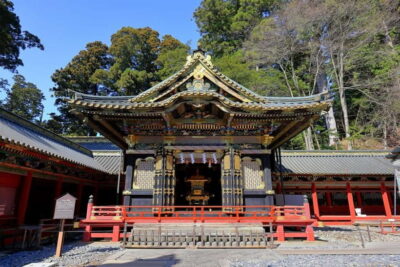
Nikko: Kegon Falls, Lake Chuzenji & Toshogu Temple
Read our review →
Tokyo: Nikko Toshogu Shrine and Kegon Waterfall Tour
Read our review →
Nikko, Kegon Waterfall & Chuzenji Lake from Tokyo
Read our review →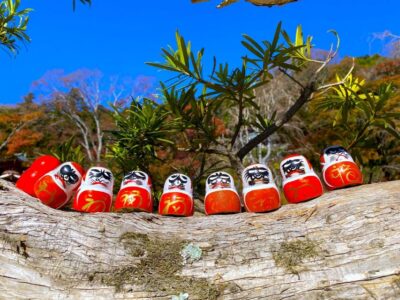
Osaka: Minoh, Katsuoji Temple, & Minoh Falls Full-day Tour
Read our review →
From Osaka/Kyoto:Mount Koya, Wakayama & Nachi Waterfall Trip
Read our review →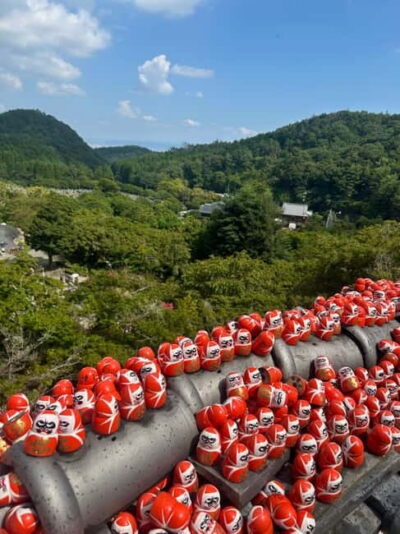
Osaka: Minoh Waterfall & Katsuo-ji Temple Half-Day Tour
Read our review →
Tokyo: Nikko Day Tour Shrines, Lake Chūzenji & Kegon Falls
Read our review →
Osaka: Mino Forest Walk and Giant Waterfall with Local Lunch
Read our review →Browse the lists this tour appears in