
Review · JAPAN WATERFALL TOURS
From Osaka/Kyoto:Mount Koya, Wakayama & Nachi Waterfall Trip
Mount Koya gives this long day its soul. You move from Wakayama Castle and samurai history to Kongobuji Temple, Shingon Buddhist art, and the lantern-lined paths of Okunoin Cemetery. The route can also finish at Nachi Waterfall, Japan’s tallest single-tier waterfall, beside Nachi Taisha Shrine.
I like the small group of up to six, which makes a flexible schedule possible, and I like that hotel pickup and drop-off are included from Osaka, Kyoto or Nara. Guides including Faizan, Rana, Muhammad Ahmad, Tahir and Hamza have been praised for clear English, careful driving, patience with photographs and regular breaks.
The main drawback is the sheer distance and walking. This is a full 12-hour day, not a gentle temple outing, and the castle, shrines and waterfall involve stairs. The published information also gives conflicting details about lunch and wheelchair access, so confirm both before paying.
Key points at a glance
- Two very different routes: Choose a Wakayama and Mount Koya day with Sandanbeki Cave, or a Mount Koya route ending at Nachi Waterfall.
- A private-sized group: The vehicle carries no more than six participants, with pickup and drop-off in Osaka, Kyoto or Nara.
- Strong spiritual focus: Kongobuji Temple, the Mount Koya Museum and Okunoin Cemetery show different sides of Shingon Buddhism.
- A flexible sightseeing style: Guides can adjust time for photographs and breaks, subject to the day’s route and driving schedule.
- A demanding walking day: Wear proper shoes and expect stairs, especially at Wakayama Castle, shrines and Nachi Waterfall.
- Check two important details: Lunch and accessibility are described inconsistently, so ask the provider for the current arrangements.
Why Mount Koya makes this more than a standard sightseeing day
Many day trips from Osaka or Kyoto stay close to the city. This one takes you into Wakayama Prefecture, where Buddhist temples, coastal cliffs and forested shrine grounds replace the usual urban sights. You get a wide slice of the Kansai Region in one day, but the tradeoff is time spent on the road.
Mount Koya, also called Koyasan, is the spiritual center of Shingon Buddhism. The visit is not just a quick look at one temple. You see Kongobuji Temple, the Mount Koya Museum, a long-established local market, and Okunoin Cemetery. Together, these stops help you understand why the mountain matters.
I especially like the contrast between the two itinerary choices. The first option adds Wakayama Castle and Sandanbeki Cave, making the day a good fit if you want architecture, samurai-era history and the coast. The second option gives you the more dramatic finale at Nachi Waterfall, where forest, shrine architecture and falling water meet.
You should choose before booking if possible. The routes are not interchangeable in feel. One is a broad Wakayama and Mount Koya circuit. The other is a longer spiritual and natural route toward Nachi.
More Waterfall Tours in Japan:
- Nikko: Kegon Falls, Lake Chuzenji & Toshogu Temple
★ 4.6 · 1,577 reviews - Tokyo: Nikko Toshogu Shrine and Kegon Waterfall Tour
★ 4.5 · 1,266 reviews - Nikko, Kegon Waterfall & Chuzenji Lake from Tokyo
★ 5.0 · 1,240 reviews
Wakayama Castle brings a samurai chapter to the morning
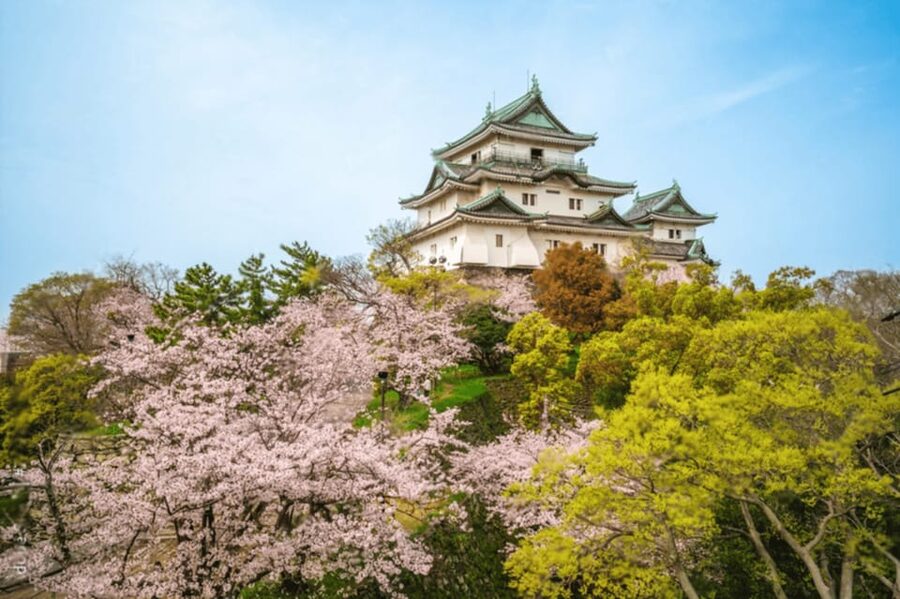
The 16th-century Wakayama Castle is the historical anchor of the first route. From the castle grounds and upper areas, you get panoramic views, while indoor exhibits focus on samurai history and artifacts.
This stop works well early in the day because it gives you a clear sense of place before the tour shifts toward Buddhist Mount Koya. I like the mix of views and exhibits. You are not only looking at a reconstructed or preserved castle setting, but also connecting it with the people and military culture of the region.
Allow for stairs. One group found the climb demanding, especially when combined with the later waterfall and shrine steps. If you are unfit, take your time and tell the guide when you need a pause. Tahir, one of the guides used on this experience, was specifically praised for explaining the next stop and checking when breaks were needed.
The castle may be less appealing if you want a slow temple day with no physical effort. It is a useful stop, but it adds another climb to an already active schedule.
Kongobuji Temple offers a calm change of pace
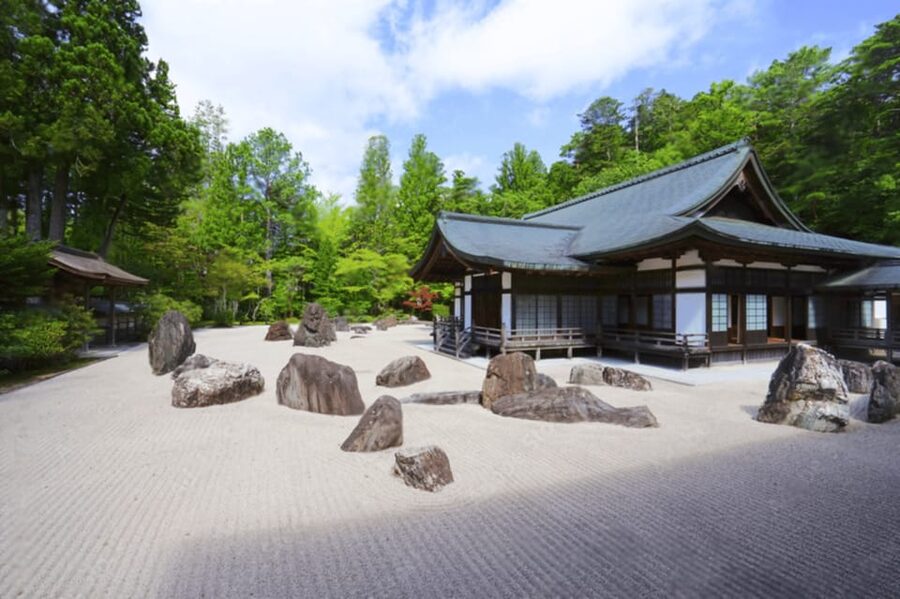
At Mount Koya, Kongobuji Temple is the central religious stop. It is the main temple of Shingon Buddhism and is known for traditional halls and a beautiful rock garden.
The value here is not simply the building itself. The temple gives you a direct introduction to Shingon practice and visual culture after the military setting of Wakayama Castle. Take time to notice the quiet halls and garden rather than rushing from one photograph to the next.
Photography is allowed, but flash photography is not permitted inside temples. A guide can provide a short introduction before you explore, as Muhammad Ahmad did for the people he led, explaining the temples, shrines and nearby surroundings.
You should also dress for changing weather. Mount Koya is a mountain destination, and the full-day route can include rain, sun and cooler conditions at different points. Bring water, sunscreen and a hat. Comfortable shoes matter more than stylish ones here.
The Mount Koya Museum explains Shingon art and practice
The Mount Koya Museum is a smaller, more focused stop. Its exhibits cover the history and art of the Shingon sect, giving context to the temples you have just seen.
I value this part of the day because temple visits can otherwise blur together. The museum helps you identify the religious ideas and artistic traditions behind the objects and buildings. It is especially useful if you are new to Japanese Buddhism and want more than a scenic walk through temple grounds.
The museum also gives your feet a break from the outdoor paths. That matters on a route with castle stairs, cemetery walks and possibly the climb around Nachi Waterfall.
The supplied information does not give a precise amount of time at the museum, so ask your guide how the day is being paced. The tour is customizable, but the longer the stop, the less time may be available elsewhere.
Same region, a different set of falls:
- Osaka: Minoh, Katsuoji Temple, & Minoh Falls Full-day Tour
★ 4.9 · 172 reviews - Osaka: Minoh Waterfall & Katsuo-ji Temple Half-Day Tour
★ 4.7 · 27 reviews - Tokyo: Nikko Day Tour Shrines, Lake Chūzenji & Kegon Falls
★ 4.9 · 26 reviews - Osaka: Mino Forest Walk and Giant Waterfall with Local Lunch
★ 5.0 · 22 reviews
Mount Koya’s old market adds an everyday local note
The route including Nachi Waterfall also lists a 176-year-old market in Mount Koya, with traditional crafts and local specialties. This is a welcome change from formal religious sites.
You get a glimpse of Mount Koya as a living community rather than only a sacred complex. Look for local items and food products, and ask your guide which specialties are worth your time. Since lunch arrangements are unclear in the published details, the market may also be a practical place to ask about food options, though you should not rely on it without confirming the plan in advance.
Vegetarian options are available, and dietary restrictions should be communicated ahead of time. One section says lunch is included, while another says lunch is not included. This is important enough to settle before departure.
Okunoin Cemetery is the day’s most atmospheric walk
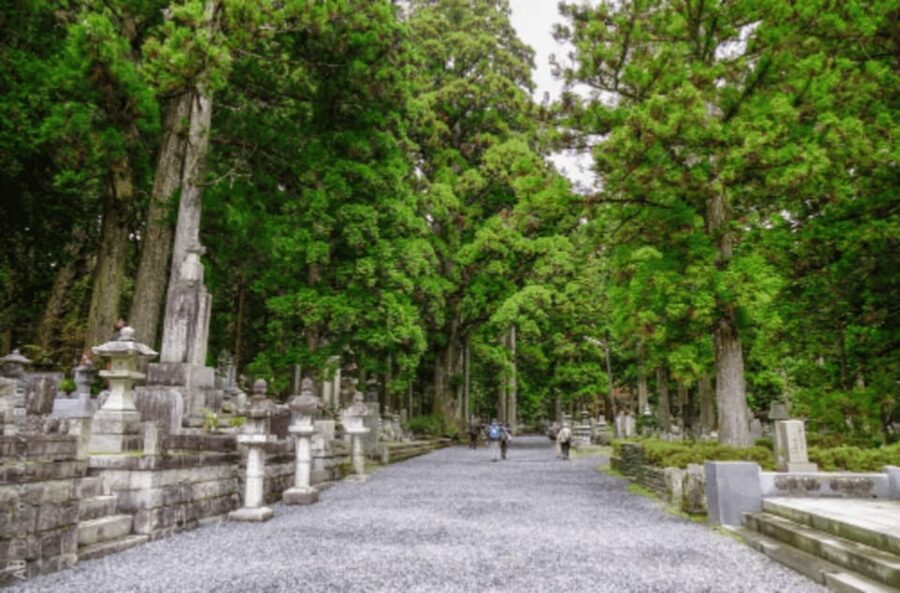
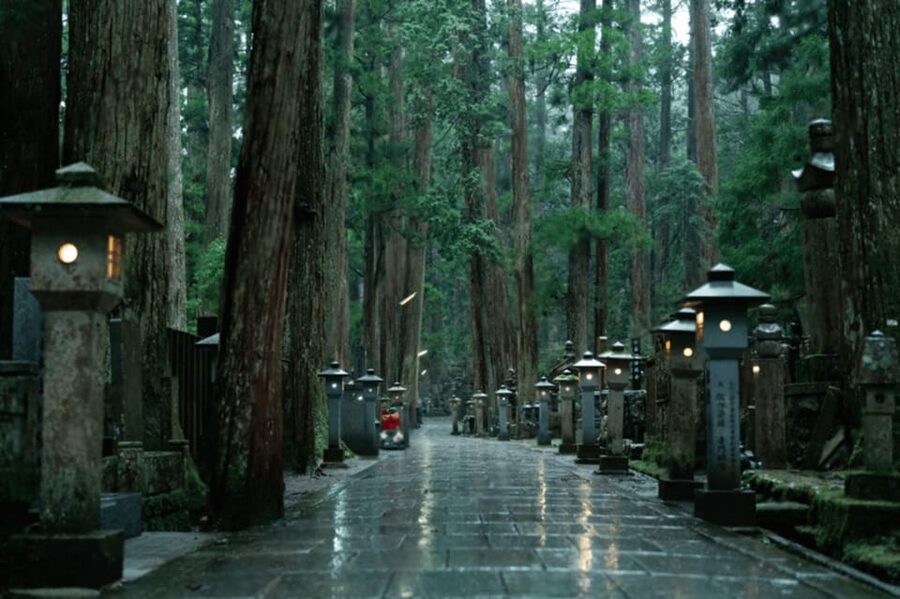
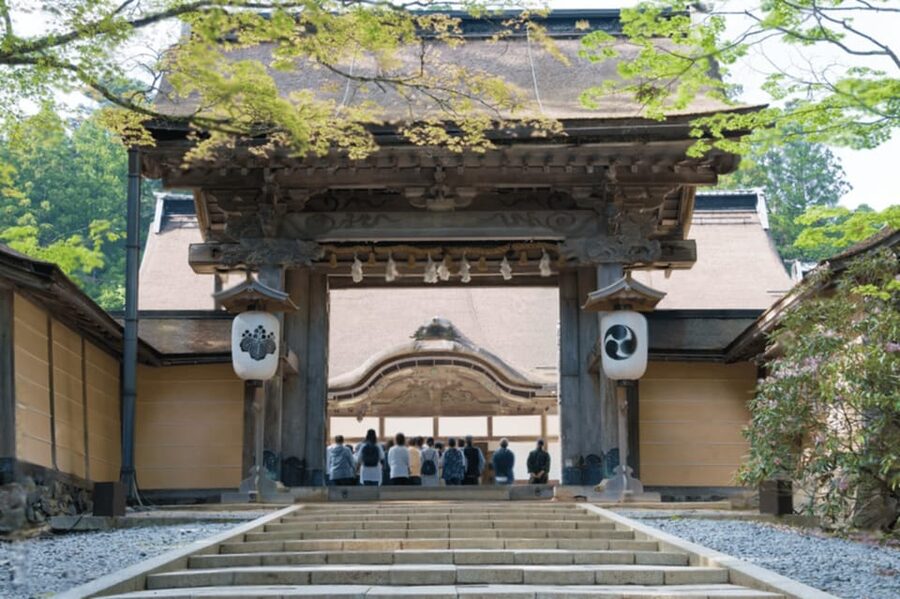
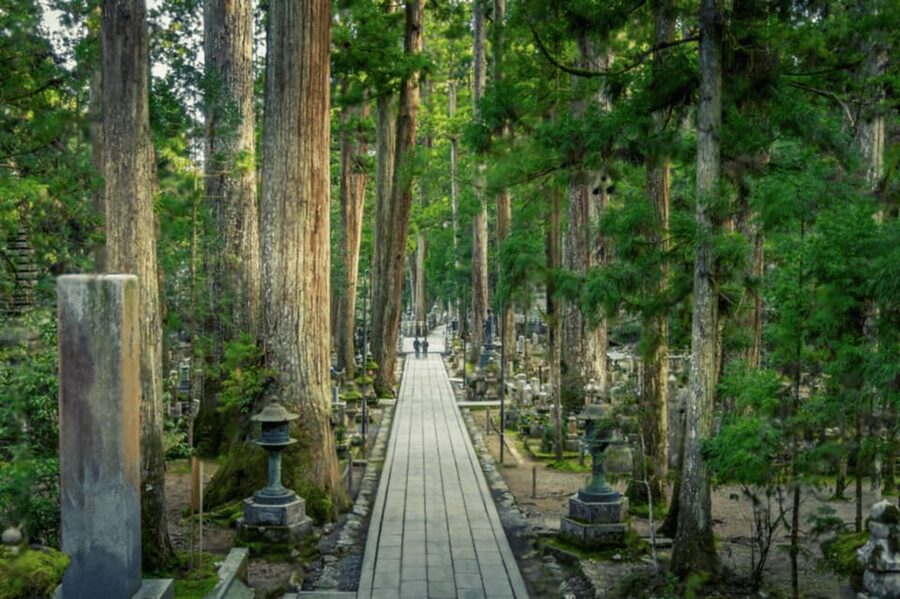
Okunoin Cemetery is described as Japan’s largest cemetery, with paths lined by centuries-old stone markers and lanterns. It honors monks and historical figures and leads through one of Mount Koya’s most memorable settings.
This is where the tour’s spiritual character becomes most apparent. You walk beneath trees and among stone markers rather than simply entering a building, and the route feels quieter and more reflective than the castle or market.
The lantern-lit pathways are especially evocative, though the tour’s exact timing will determine how much atmosphere you experience. A 12-hour day starting from Osaka, Kyoto or Nara may mean arriving during daylight rather than in the evening.
Wear shoes with good support. The cemetery walk is not described as technically difficult, but it adds substantial time on your feet. If you have knee, balance or mobility concerns, ask about the exact route. The activity is marked as unsuitable for people with mobility impairments and wheelchair users, despite another section calling it wheelchair accessible. That contradiction needs clarification.
Sandanbeki Cave gives the first route a rugged finish
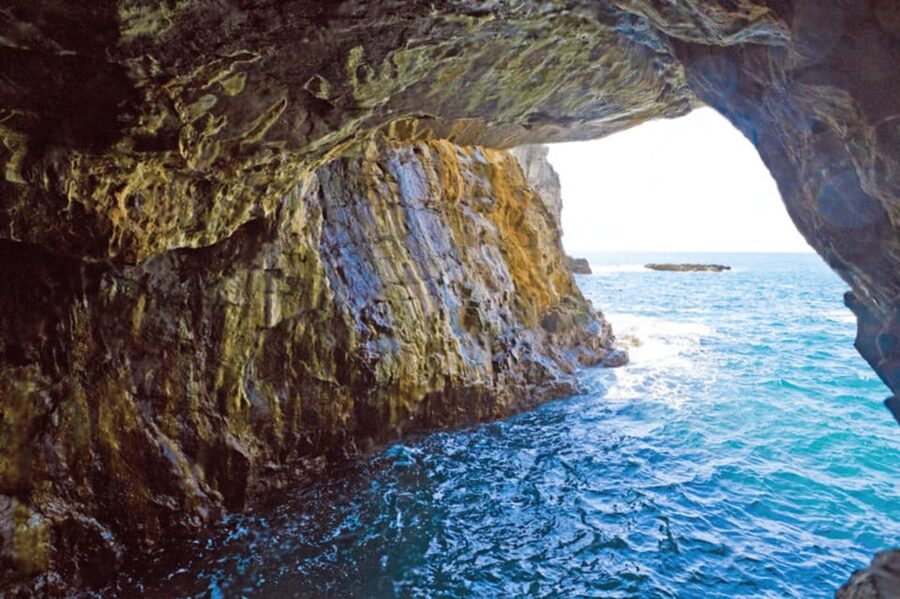
The option without Nachi Waterfall ends at Sandanbeki Cave, a dramatic coastal cave associated with a pirate hideout. The surrounding cliffs give this version of the tour a strong natural finish.
The cave is a good choice if you prefer coastal scenery to a long trip toward Nachi. It also adds a bit of legend and adventure after the more formal temple visits. The cliffs and cave make the first itinerary feel varied, with castle, mountain, cemetery and coast all included.
Do not expect a relaxed seaside stop. The day is already long, and cliffside terrain can require careful walking. Ask the guide how much time is planned there, especially if you want photographs.
Nachi Waterfall is the big payoff on the second route
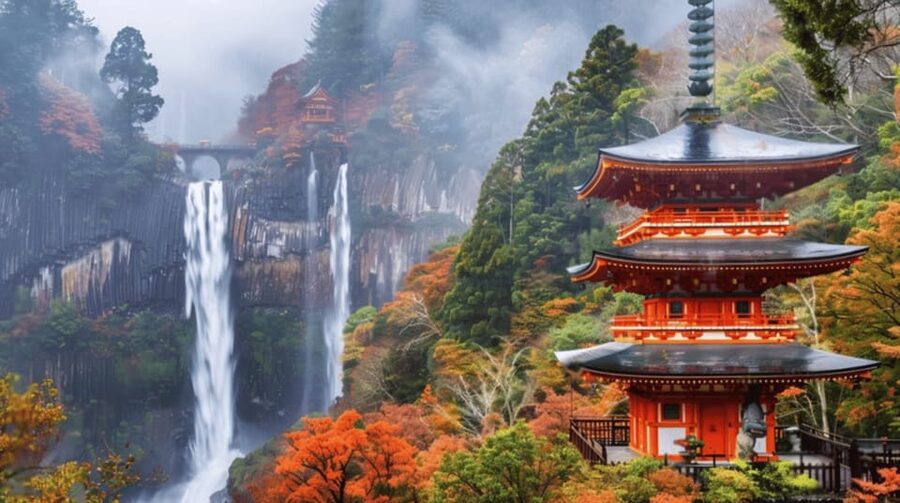
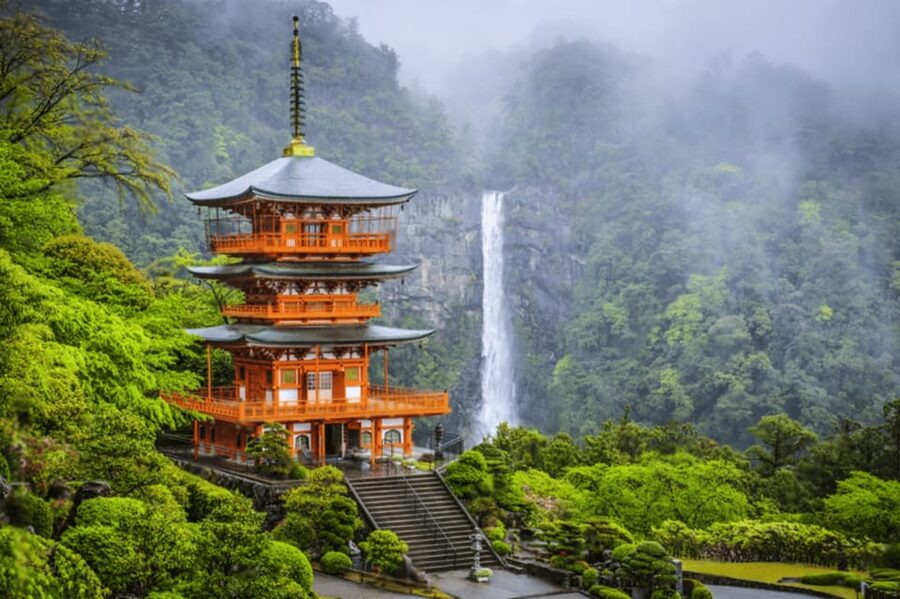
The Nachi Waterfall option ends at Japan’s tallest single-tier waterfall. It is surrounded by dense forest and the Nachi Taisha Shrine, creating one of the most striking combinations of natural scenery and religious architecture in the region.
This is the route to choose if the waterfall is a top priority. Faizan was able to adjust a day around a last-minute request to see Nachi Falls, wait patiently for many photographs and stop at other coastal viewpoints. That flexibility is a real benefit of using a small private group rather than a large fixed coach.
The route does require stamina. One group described the stairs to the waterfall and shrines as a test of perseverance, but also found the effort worthwhile. Rain can make the scene especially dramatic, as Muhammad Ahmad’s group discovered, though wet weather also makes steps more slippery.
Nachi Waterfall was scheduled to close for restoration until January 5, 2025. That date has passed, but current access can change, so confirm that the waterfall is open when you book. If it is unavailable, the Mount Koya and Wakayama route remains the stated alternative.
What the small group changes
The maximum group size is six, and that is one of the strongest features of the experience. You are not waiting for dozens of people to board a coach, and the guide can respond more easily when you need a photo stop, explanation or short rest.
The guides named in the supplied information include Faizan, Muhammad Ahmad, Rana, Tahir and Hamza. Assignments may vary, but the pattern is clear: the guide also acts as driver and host. Rana was praised for fully customizing a day and helping with photographs. Hamza looked after a family at Mount Koya, while other guides were noted for polite service and good English.
That setup has a practical advantage on a long route. You can ask questions as you go, and the guide can give a short orientation before each site. It also means your experience depends more on the individual guide and road conditions than it would on a standard group excursion.
Is $910 good value for up to six people?
The price is $910 per group, not per person, for as many as six participants. For a full private-sized day with hotel pickup and drop-off, transportation, a professional English-speaking guide, some entrance fees and tips, the price can be reasonable when divided among a full group.
At six people, the cost works out to about $152 per person before any personal spending. With four people, it is about $228 each. For one or two people, the value is harder to justify unless you place a high value on door-to-door transport and a flexible private itinerary.
The price also covers a route that would be complicated to arrange independently in one day. You avoid coordinating transport between Osaka, Kyoto or Nara, Mount Koya, Wakayama and the waterfall area. The tradeoff is that you pay for convenience and a very long day, not for a slow stay in each place.
Check which entrance fees are included, since the wording says some sites rather than all sites. Also settle the lunch question before booking. The information both excludes lunch and says lunch is included, so the final price may not tell the whole story.
Who should book this day trip?
I would recommend it to you if you want to see several major sights in one ambitious day and prefer a small group to a large organized coach. It suits adults who are comfortable with stairs, long drives, moderate walking and a changing pace.
It is particularly good for families with older children, couples, friends sharing the $910 group price, and photographers who want flexibility. The guides have shown patience with photo stops, and the private-sized format makes it easier to spend more time at a favorite location.
I would be cautious if you are pregnant, traveling with children under six, or have mobility limitations. The activity is specifically marked as unsuitable for pregnant women, children under six, people with mobility impairments and wheelchair users. The conflicting accessibility note makes a direct check with the provider essential.
Bring comfortable shoes, a hat, sunscreen, water and a camera. Smoking is not allowed, and flash photography is prohibited inside temples.
FAQ
How long does the Mount Koya and Wakayama trip last?
The activity lasts 12 hours. Starting times depend on availability, so check the date and departure options before booking.
Where can I be picked up and dropped off?
Pickup is available from Osaka, Nara or Kyoto. Drop-off options are Nara, Kyoto or Osaka.
Does the tour include Nachi Waterfall?
You can choose an itinerary that includes Nachi Waterfall. The other option focuses on Wakayama and Mount Koya and includes Wakayama Castle and Sandanbeki Cave instead.
Is lunch included?
The supplied information is inconsistent. One section says lunch is not included, while another says it is included. Vegetarian choices are available, and you should confirm the current lunch arrangement and share dietary restrictions in advance.
Is the tour suitable for wheelchair users?
The information gives conflicting details, listing the activity as wheelchair accessible while also saying it is not suitable for wheelchair users or people with mobility impairments. Contact the provider before booking to confirm the actual vehicle, route and site access.
Can I cancel for a full refund?
Yes. You can cancel up to 24 hours in advance for a full refund. The activity also offers reserve-now, pay-later booking.
Should you book it?
Book this tour if your priority is variety, convenience and a small group that can adjust for photographs and breaks. The strongest choice depends on your main goal: pick the Wakayama route for the castle and coastal cave, or choose the Nachi option for the waterfall and shrine setting.
Skip it if you want a relaxed day, dislike long drives or need guaranteed step-free access. Before committing, confirm the lunch policy, current Nachi Waterfall access, included entrance fees and wheelchair arrangements. For a fit group sharing the cost, this is an ambitious but rewarding way to connect Wakayama’s castle, Buddhist mountain and dramatic natural sights in one carefully packed day.
Newest waterfall trips we have reviewed in Japan
- Tokyo: Nikko Kegon Falls Lake Chuzenji Toshogu Temple & More★ 4.9 · 12 reviews
- Tokyo: Nikko Day Tour Shrines, Lake Chūzenji & Kegon Falls★ 4.9 · 26 reviews
- Osaka: Minoh Waterfall & Katsuo-ji Temple Half-Day Tour★ 4.7 · 27 reviews
- Osaka: Mino Forest Walk and Giant Waterfall with Local Lunch★ 5.0 · 22 reviews
- Kobe: Guided Tour of Nunobiki Waterfalls and Herb Garden★ 5.0 · 11 reviews
- Itoshima Scenic Tour|Totoro Forest, Falls & Ocean View Spots★ 4.3 · 7 reviews
- Get to know Minoo from Osaka. Katsuoji Temple, Ryuanji Waterfall and Ryuanji Temple★ 5.0 · 16 reviews
- From Tokyo: Nikko Customize private Tour With English Driver★ 4.9 · 11 reviews
Japan Waterfall Tours, compared.
Nikko: Kegon Falls, Lake Chuzenji & Toshogu Temple
Read our review →
Tokyo: Nikko Toshogu Shrine and Kegon Waterfall Tour
Read our review →
Nikko, Kegon Waterfall & Chuzenji Lake from Tokyo
Read our review →
Osaka: Minoh, Katsuoji Temple, & Minoh Falls Full-day Tour
Read our review →
Osaka: Minoh Waterfall & Katsuo-ji Temple Half-Day Tour
Read our review →
Tokyo: Nikko Day Tour Shrines, Lake Chūzenji & Kegon Falls
Read our review →
Osaka: Mino Forest Walk and Giant Waterfall with Local Lunch
Read our review →
Get to know Minoo from Osaka. Katsuoji Temple, Ryuanji Waterfall and Ryuanji Temple
Read our review →Browse the lists this tour appears in