
Review · ZAMBIA WATERFALL TOURS
From Livingstone: Victoria Falls Guided Half-Day Tour
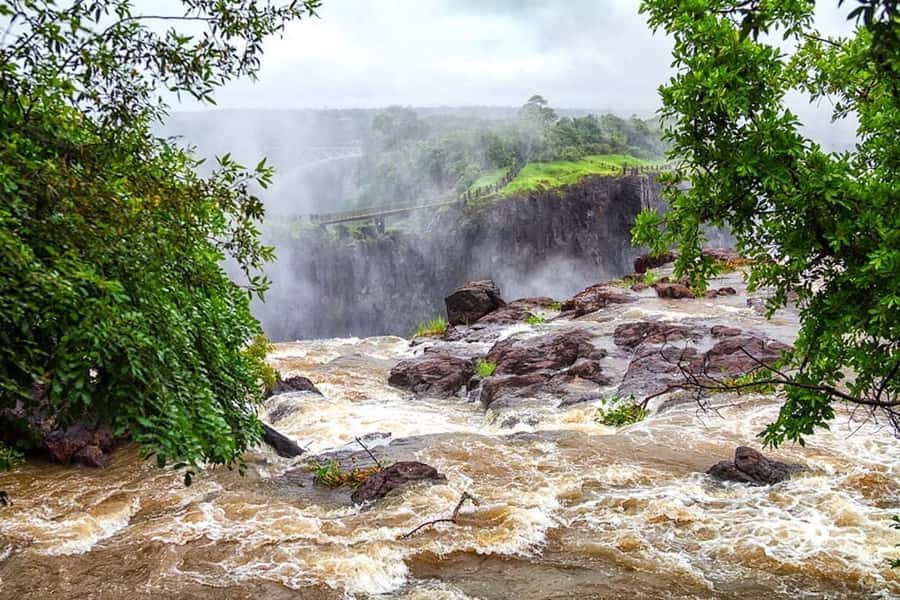
Victoria Falls is at its most thrilling when you can hear the river before you see it. This three-hour walk through Mosi-oa-Tunya National Park brings you to Knife Edge Bridge and the Boiling Pot, with spray, rainbows, and shifting views of the eastern and main falls. I like the small group limit of eight and the way the guide can pause for photos rather than rush you past each viewpoint.
I also like that the $85 price includes park fees, hotel transfers, bottled water, and a professional guide. The main thing to consider is the season: from April through August, heavy spray can soak you and hide parts of the falls, while September through March may show more rock and thinner streams. Bring rain gear, or rent a poncho if one is available.
Key points to know before booking
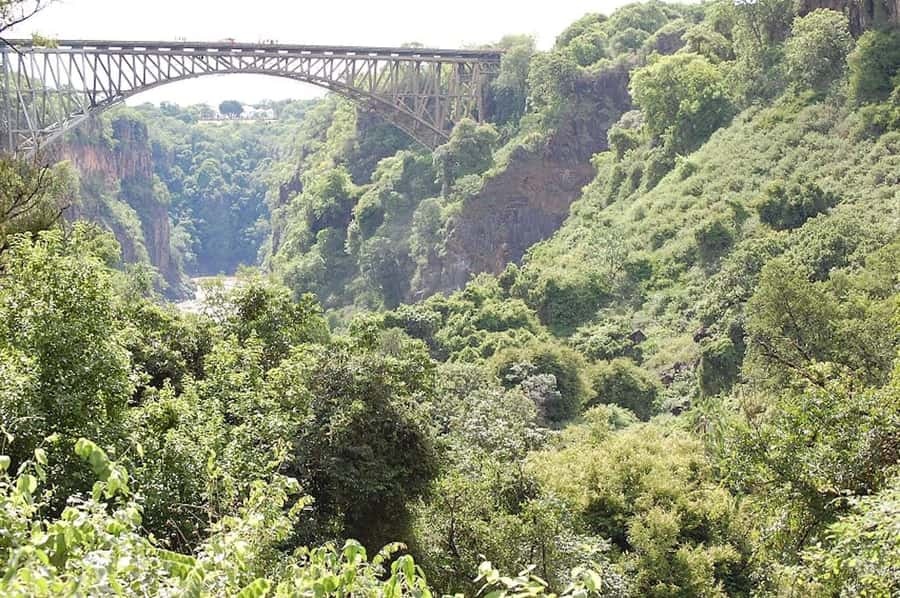
- Knife Edge Bridge gives the tour its best drama: Expect close views of the eastern and main falls, with spray often blowing across the path.
- The Boiling Pot shows the river changing direction: You look down toward the point where the Zambezi turns toward Batoka Gorge.
- The three-hour length is focused: You get the main viewpoints without giving up a full day in Livingstone.
- Small groups make photo stops easier: The tour accepts no more than eight people.
- Water levels change the experience: April to August brings a roaring river, while September to March can reveal more of the rocks.
- Ponchos matter: A waterproof camera, comfortable shoes, and rain gear are practical essentials.
A close look at Victoria Falls from Livingstone
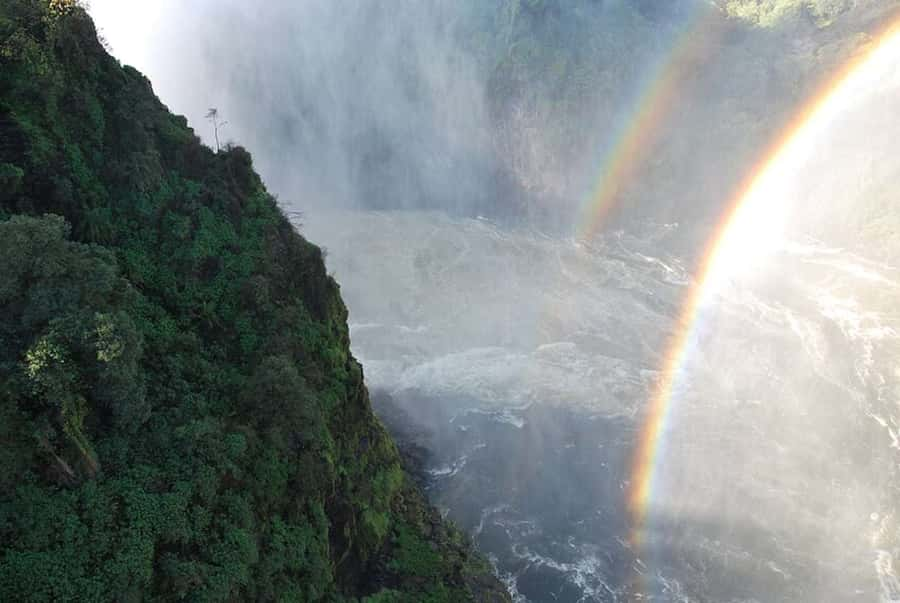
This tour takes you to the Zambian side of Victoria Falls, within Mosi-oa-Tunya National Park. The park protects the falls and the surrounding area, so your entrance fee is already covered in the price.
You are not simply driven to a lookout, handed a few minutes for photographs, and taken away. The main activity is a guided walk along the cascades. Your guide explains how the falls formed, how the water moves through the gorge, and how the local ecosystem fits around one of Africa’s great rivers.
That context matters here. Victoria Falls is so large that a quick glance can leave you with a string of impressive photographs but little sense of how the river works. The guide helps connect the separate viewpoints, so Knife Edge Bridge and the Boiling Pot feel like parts of one river story rather than isolated stops.
Your hotel pickup and drop-off in Livingstone keep the outing simple. You do not need to arrange a separate taxi to the park, and the three-hour schedule leaves room for other plans on the same day.
More Half-Day Trips in the world:
- Half-Day Trip to Montmorency Falls and Ste-Anne-de-Beaupré from Quebec city
★ 4.0 · 2,718 reviews - Quebec City: Montmorency Falls & Ile d’Orleans Half-Day Tour
★ 4.3 · 2,144 reviews - Multnomah Falls and Columbia River Gorge Half-Day Hiking Tour
★ 5.0 · 2,108 reviews
Mosi-oa-Tunya National Park sets the scene
The first part of the outing takes place in Mosi-oa-Tunya National Park. This is where you get your bearings and begin to understand the scale of the falls.
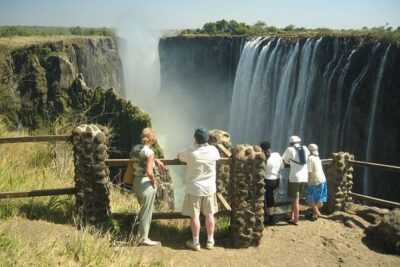
The guide provides information about the waterfall’s formation and the natural setting around it. I find this especially useful at Victoria Falls because the river is not one single wall of water from every angle. Depending on the season and the viewpoint, you may see tremendous white water, thin streams dropping over exposed rock, or a curtain of mist that partly hides the far edge.
The park walk also gives the visit a more natural feel than a single roadside stop. You move from one viewing point to another, with the sound and spray changing as you go.
The path is best treated as a real walking route, not a polished stroll. Comfortable shoes are listed as essential, and I would take that advice seriously. The information provided does not promise an easy, flat route, so sturdy, comfortable footwear is the sensible choice.
Knife Edge Bridge and the spray zone
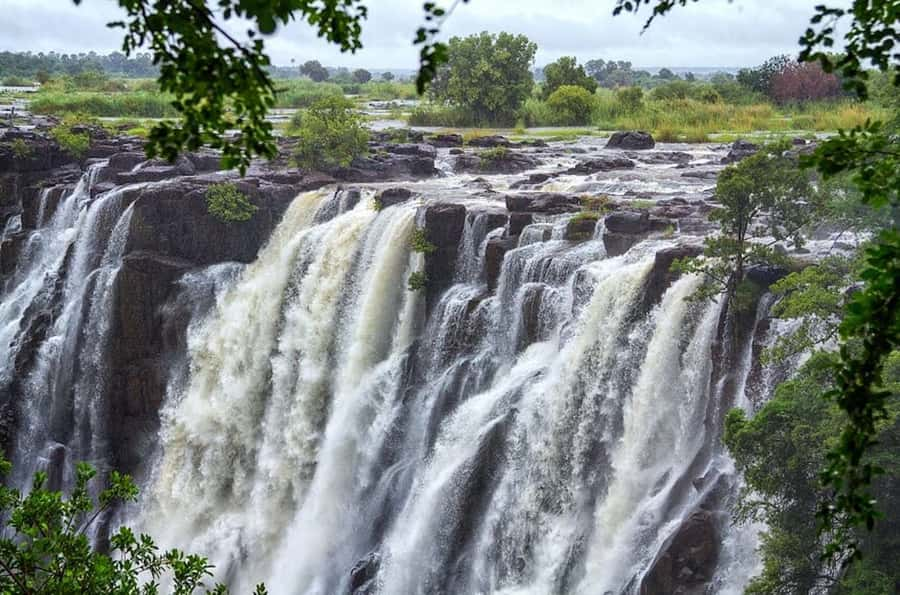
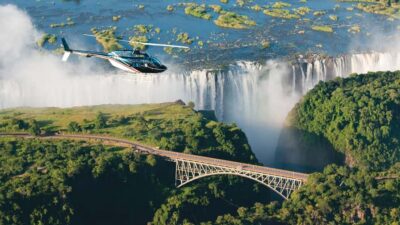
Knife Edge Bridge is the most memorable stop for many people on this route. From here, you get some of the strongest views of the eastern and main falls.
The bridge places you close to the spray. In high-water months, that spray can be constant enough to soak clothing, cameras, and hair. It is part of the fun, but it also changes how you see the falls. A curtain of mist can soften the view, then open briefly to reveal the water and rock across the gorge.
This is where a guide adds practical value. A good guide can help you choose when to stop, where to look, and how to protect your camera. Elizabeth, who visited in July, found a rented poncho essential and saw rainbows forming through the mist. That is a useful picture of the high-water experience: wet, loud, and visually dramatic.
Take a waterproof camera if you want photographs here. A normal camera may be fine in a dry spell, but the tour information specifically advises waterproof equipment and rain gear. A plastic cover or sealed bag for your phone is also a sensible precaution, though the tour itself does not provide one.
The small group limit helps at this point. With no more than eight people, the guide has a better chance of stopping when everyone is ready for a photograph. Ian also appreciated being able to pause for pictures rather than being pushed along at a fixed pace.
Looking into the Boiling Pot
The Boiling Pot is one of the tour’s more interesting viewpoints because it shows what happens after the river reaches the falls. Here, the water turns and continues toward Batoka Gorge.
The name gives you a good idea of the scene. The river churns below, squeezed into a tighter section after its plunge. From the viewpoint, you can see the force and movement of the water in a different way than at the main curtain of the falls.
I like this stop because it adds shape to the visit. The main falls are about height, spray, and width. The Boiling Pot is about direction and pressure. You see the river changing course and beginning its next stage.
Your exact view will depend on water levels and mist. In the wetter months, the roar can be overpowering and the spray thick. In the drier part of the year, you may look down at smaller streams moving across more visible rock. Neither season is simply better. They offer different versions of the same place.
More Guided Trips in the world:
- From Marrakech: Ouzoud Waterfalls Guided Hike and Boat Trip
★ 4.7 · 33,630 reviews - From Marrakech: Ouzoud Waterfalls Guided Trip with Boat Ride
★ 4.9 · 10,915 reviews - Marrakesh: Ourika Waterfalls, Atlas Mountains, Guide + Lunch
★ 4.9 · 9,986 reviews - From Marrakech: Ouzoud Waterfalls Guided Tour & Boat Ride
★ 4.6 · 9,802 reviews
How the seasons change the falls
The tour operates year-round, and the falls remain impressive in every season, but you should choose your expectations carefully.
From April through August, the water is described as roaring. This is the time for maximum force and spray. Rainbows can appear in the mist, as they did during Elizabeth’s July visit, but you may also get wet and lose clear views at some points.
From September through March, the water can be much lower. The description notes that you may look down at trickles flowing over the rocks. That sounds less dramatic, but lower water can reveal details hidden during the high-water period. You may see more of the rock structure and the shape of the falls themselves.
The dates do not guarantee one exact scene at every viewpoint. Water levels affect the eastern and main falls differently, and conditions can shift. The practical lesson is simple: choose high water for noise, spray, and broad power; choose lower water for exposed rock and clearer structural detail.
The guide can shape the whole visit
The tour includes an English-speaking professional guide, and the guide is central to the experience. You are given background on the falls, their formation, their history, and the surrounding area rather than being left to read signs on your own.
Ian described his guide as friendly, patient, and well informed about both the falls and the surrounding area. He also valued the freedom to stop for photographs. Those are important qualities on a waterfall tour, where the best view may last only a few seconds through moving mist.
The information provided also identifies Jinga as a German-speaking guide in one past booking, though that experience was not strong for German-language support. If you need guiding in German, confirm the language before booking rather than assuming it is guaranteed. The stated tour language is English.
One past pickup also ran late and required a phone call to the hotel. That appears to have been an isolated problem, but it is worth keeping in mind. Have your hotel reception ready to help contact the provider if the vehicle does not arrive at the agreed time.
What the $85 price includes
At $85 per person, this is not the cheapest way to see a waterfall if you only want transport to a viewpoint. The price makes more sense when you use the included services: national park fees, hotel pickup and drop-off in Livingstone, a guide, bottled water, and a small group capped at eight people.
The park fee alone would otherwise be another item to arrange. Hotel transfers also remove the need to organize local transport, which is useful if you are staying in Livingstone and want a short, self-contained outing.
The small group is another part of the value. A private tour is not promised, but eight people is still a manageable number for a walking visit. You get some of the flexibility of a smaller outing without paying for a fully private guide.
The tour lasts three hours, so you are paying for a focused visit rather than a full-day program. That is a good fit if you want to see the Zambian side of the falls and still keep most of your day available. It is less suitable if you want a long nature walk or several other activities built into the same booking.
Rain gear is not included. That is the main extra cost or preparation to consider. In wetter months, you may need to rent a poncho locally, as Elizabeth did, or bring your own waterproof jacket. Bottled water is supplied, but your clothing and camera protection are your responsibility.
What to bring for a comfortable walk
Wear comfortable shoes with enough grip for a wet walking route. The park paths and viewing points can receive spray, particularly near Knife Edge Bridge.
Pack rain gear in every season. Even in a lower-water period, conditions can change around the viewpoints. In high water, a light rain jacket may not be enough, so a poncho can be more practical.
A waterproof camera is specifically recommended. If you bring a phone or standard camera, keep it protected between photographs. A sealed bag also gives you somewhere to put wet items after crossing the spray zone.
You receive bottled water, but it is still sensible to dress for a warm outdoor walk. The tour data does not specify the weather, temperature, or shade at each stop, so plan for changing conditions rather than relying on one layer.
Who will get the most from this tour
I would choose this outing if you are staying in Livingstone and want a clear, guided introduction to Victoria Falls without giving up a whole day.
It suits first-time visitors who want the main Zambian viewpoints explained in plain terms. The guide gives you the story behind the falls, while the walking route lets you see the water from more than one angle.
It is also a good match for photographers who prefer a guide willing to wait at viewpoints. Ian’s experience suggests the pace can allow time for pictures, though you should still expect a group schedule rather than unlimited time at every stop.
Families and mixed-age groups may appreciate the short duration, but the walk still calls for comfortable shoes and the ability to manage spray and wet paths. The tour information does not give an accessibility description, so anyone with specific mobility needs should confirm the route before booking.
I would hesitate only if you want a dry, controlled sightseeing experience, need guaranteed German guiding, or hope to spend a full day exploring the park. This is a concentrated waterfall walk, not an all-purpose Livingstone excursion.
Booking flexibility and timing
The tour offers free cancellation up to 24 hours before the activity for a full refund. You can also reserve now and pay later, which helps if your Livingstone schedule may change.
Starting times depend on availability. Since the outing lasts three hours and includes hotel pickup, check the exact start time against your other plans rather than assuming it will fit around lunch or another fixed booking.
The advertised group size is limited to eight. One past booking had only two participants, so the group may be smaller, but you should not count on having a private tour.
Savannah Southern Safaris provides the experience. The supplied information does not name a standard guide for every departure, so treat names such as Jinga as examples from individual bookings, not a guarantee of who will lead your tour.
Should you book this Victoria Falls tour?
Book it if you want a short, organized visit to the Zambian side of Victoria Falls with park entry, Livingstone transfers, an English-speaking guide, and the chance to reach Knife Edge Bridge and the Boiling Pot.
The strongest reasons are the focused three-hour format, small group size, and guide-led explanation of the falls and surrounding ecosystem. The main cautions are wet conditions, changing water levels, and occasional language or pickup issues that make it wise to confirm details before departure.
For high-water drama, pack a poncho and waterproof camera. For lower-water detail, expect more exposed rock and thinner streams. At $85, the tour offers fair value when you want convenience and interpretation without committing your whole day.
FAQ
How long does the Victoria Falls tour last?
The tour lasts three hours, including the guided visit to Mosi-oa-Tunya National Park and the waterfall viewpoints.
What is included in the $85 price?
The price includes national park fees, hotel pickup and drop-off in Livingstone, a professional guide, and bottled water.
Is hotel pickup included?
Yes. Pickup and drop-off are included from your hotel in Livingstone.
What language is the tour conducted in?
The stated tour language is English. If you need German guidance, confirm availability before booking.
What should I bring?
Bring comfortable shoes, a waterproof camera, and rain gear. A rain jacket is not included, and a poncho may be useful near Knife Edge Bridge.
How far in advance can I cancel?
You can cancel up to 24 hours in advance for a full refund. The activity also allows you to reserve now and pay later.
Newest waterfall trips we have reviewed in the world
- Skywalk Glass Bridge Waterfall Mountain Ancient Cave Private Tour★ 4.5 · 6 reviews
- Murchison Falls 2 Days Game Safari (4 people Minimum required)★ 5.0 · 10 reviews
- Private Tour to Gulong Canyon with Glass Bridge and Water Falls from Guangzhou★ 5.0 · 20 reviews
- Glass Bridge Waterfall Ravine Underground River Cave Private Tour★ 5.0 · 8 reviews
- Cloud Forest and waterfalls private Day trip★ 5.0 · 33 reviews
- La Leona waterfall adventure hike half day★ 5.0 · 79 reviews
- From Guangzhou to Gulong Gorge and waterfall -Nature & Adventure★ 5.0 · 7 reviews
- La Leona Waterfall★ 5.0 · 36 reviews
Zambia Waterfall Tours, compared.
Browse the lists this tour appears in