
Review · BIG ISLAND WATERFALL TOURS
Farm to Table Cooking Class at Kulaniapia Falls
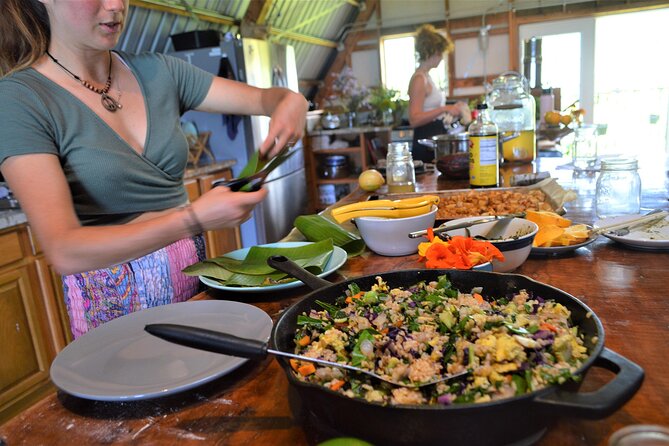
The best part of this Hilo cooking class happens before you reach the stove: you walk through Kulaniapia Farms and pick much of the food that will become your lunch. The farm grows its produce in volcanic soil, and the setting includes a waterfall, bamboo gardens, Hilo Bay views, and Mauna Kea in the distance. You eat what you harvest, which gives the meal a clear sense of place.
I like the small-group format, capped at eight people, and the way the class connects gardening, cooking, and responsible food production. I also like that the lunch is plant-based and uses more than 90 percent farm-grown ingredients. The main thing to consider is that the hands-on cooking can vary by instructor. Some sessions involve plenty of preparation, but the final cooking may be handled mostly by a staff member.
Key points to know before you book
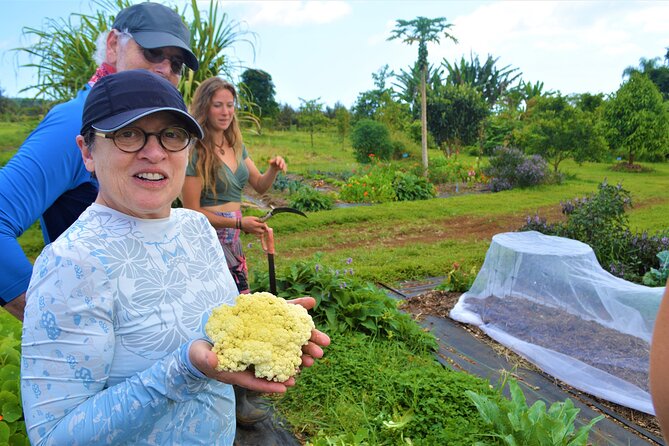
- You harvest the ingredients first: Seasonal vegetables from the farm supply most of the lunch.
- The setting is part of the experience: Expect a waterfall, tropical gardens, Hilo Bay views, and Mauna Kea scenery.
- The group stays small: The maximum is eight people, which suits a relaxed, social class.
- The meal is plant-based: The menu changes with the farm’s seasonal produce.
- Wear sturdy shoes: You walk over uneven ground and through weedy areas.
- Plan ahead: The class is often reserved about 46 days in advance, so popular dates may go quickly.
Starting at Kulaniapia Farms at 9:30 am
The morning begins at 100 Kulaniapia Drive in Hilo. You meet at 9:30 am and return to the same place after roughly four hours. Since the farm is also home to the Inn at Kulaniapia Falls, you are not arriving at an ordinary cooking school. The waterfall and tropical grounds set the tone before any vegetables reach the cutting board.
I would allow a little extra time to find the meeting point and settle in, though the official start time is clear. This is not a quick demonstration squeezed between sightseeing stops. Four hours gives you room to walk, harvest, prepare food, and sit down for lunch without rushing.
The group limit of eight matters here. A farm tour can feel awkward when a large crowd gathers around a single plant or kitchen counter. With a small group, you have a better chance to ask questions, handle the produce, and follow what is happening in the kitchen.
The people leading the class can change. Past sessions have been led by Natalie, Davey, Adrian, and Ayden, among others. Their roles have also varied, with some focusing more on the farm and others taking the lead in the kitchen. I would book this for the setting and the format rather than for one particular instructor.
More Cooking Classes in Big Island:
- Quad ride, waterfalls & aunthentic cooking class in munduk
★ 4.9 · 53 reviews - Lombok: Tetebatu Walk, Waterfall, Monkey Forest & Cooking
★ 5.0 · 7 reviews - Cooking, Farming and Waterfall In Vietnam Countryside
★ 3.0 · 6 reviews
Walking through a working tropical farm
The farm walk is more than a scenic stroll. You learn how food grows in this part of Hawaii, then help choose the ingredients for lunch. The produce changes with the season, so the menu is not fixed in the way it would be at a restaurant or a standard cooking school.
That changing menu is one of the class’s strengths. You do not simply receive a preplanned basket of vegetables. You see what is ready, pick what looks best, and learn how a farm’s daily harvest shapes a meal. The class presents farm-to-table as a working practice, not just a label on a menu.
You may handle a mix of fresh vegetables and tropical produce. Past sessions have included bananas picked straight from the tree, along with other food grown on the property. The farm also has goats, and one class included feeding them. Those details make the morning feel tied to the whole operation rather than limited to a garden tour.
The ground is not guaranteed to be smooth. You may walk through weedy areas and over uneven surfaces, so wear tennis shoes or another closed-toe, flat shoe. I would skip sandals, slick soles, and anything you do not want near soil or mud.
Picking more than 90 percent of your lunch
The class aims to use farm produce for more than 90 percent of the meal. That is a strong feature for anyone curious about how a farm’s harvest turns into a practical lunch. You are not just tasting a few garnish leaves from the garden. Much of the plate comes from what you help collect.
The menu is listed simply as farm-fresh produce rather than a fixed dish. That tells you what kind of cooking class this is: seasonal, plant-based, and shaped by what is growing. If you want to master one named Hawaiian recipe, this may not be the right choice. If you want ideas for turning fresh vegetables into a meal, it is a better fit.
I like this approach because it teaches flexibility. At home, you will not always find every ingredient a recipe calls for. Learning to work with what is ripe and available is useful kitchen knowledge, especially for anyone trying to eat more local food.
The tradeoff is that a seasonal menu can be less predictable. The exact lunch depends on the farm and the harvest that day. The supplied information does not identify a substitute menu or list common allergens, so you should ask about dietary needs before booking if that matters to you.
From garden work to the refurbished barn kitchen
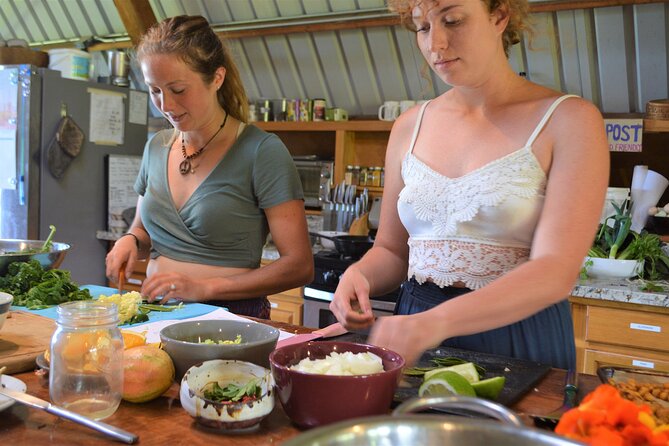
After the farm walk and harvesting, you move to a refurbished barn to prepare lunch. The kitchen is on the second floor, with views toward the ocean and the surrounding property. This is a particularly good part of the experience because the setting remains connected to the food rather than sending you into a separate commercial classroom.
The preparation is hands-on. You help wash, cut, and work with the vegetables you picked. The class gives you the tools and supplies needed for harvesting and cooking, so you do not need to bring equipment.
The amount of actual stove work can vary. One session involved plenty of vegetable preparation, while a volunteer or staff member handled more of the cooking. That distinction is important. If your ideal class means standing over the pan and cooking each course yourself, you may find the format a little light on technique.
Still, you can learn from watching an experienced cook put the meal together. Davey, who has led a past class, was praised for sharing useful kitchen ideas even with someone who already cooked often. Other sessions were described as casual and volunteer-led, with less formal instruction. I would expect a friendly working kitchen rather than a strict chef school.
More Farm Visits in Big Island:
- Farm-to-Table Chef’s Dinner at Kulaniapia Falls
★ 4.5 · 42 reviews - Isafjordur: Dynjandi Waterfall Tour and Icelandic Farm Visit
★ 4.7 · 1,245 reviews - Dynjandi Waterfall & Iceland Farm Visit Tour
★ 4.5 · 1,056 reviews - Big Island: Volcanoes, Waterfalls, & Coffee Farm Day-Trip
★ 4.9 · 414 reviews
Lunch with Hilo Bay and Mauna Kea in view
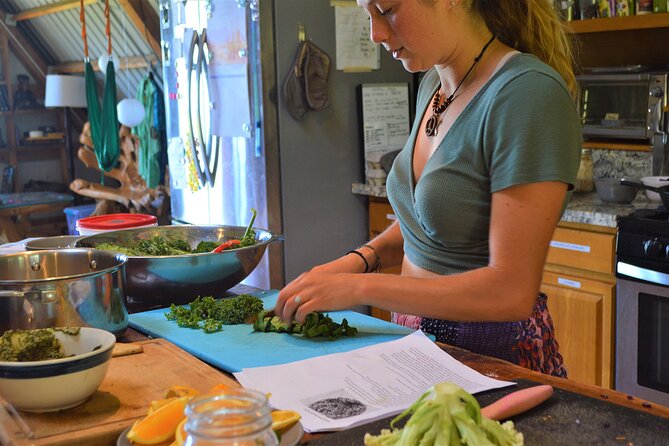
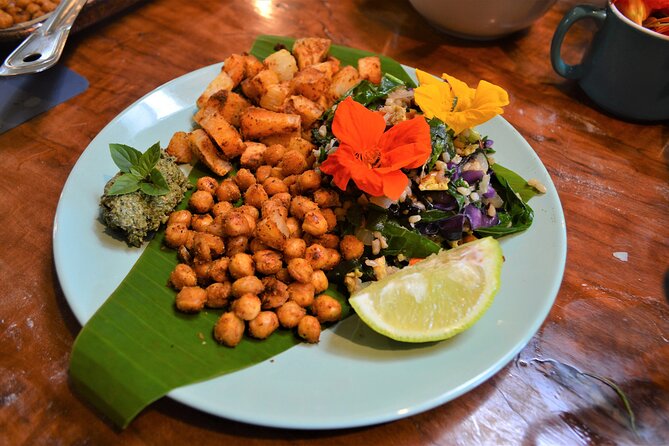
The payoff is sitting down to eat a lunch made from the morning’s harvest. The food is plant-based and fresh, with the exact dishes guided by the season. You are eating in a place where the source of the ingredients is only a short walk away.
The views add real value. From the barn area, you can look toward Hilo Bay and Mauna Kea while you prepare or enjoy the meal. The setting is not a minor backdrop. It helps turn lunch into a pause in the day, especially if you have spent the rest of your Big Island trip driving between sights.
I would not choose this class solely for the food if you are looking for a polished restaurant meal. The appeal is the connection between the garden, the people working there, and your plate. The lunch is part of a four-hour experience, not a separate dining reservation.
The property also has coffee, tropical gardens, bamboo, and access to views of the waterfall. A walk toward the river has been part of some visits. The exact flow of the morning may vary, but you should have a chance to take in more of the grounds before or after the meal.
The waterfall and farm setting add more than scenery
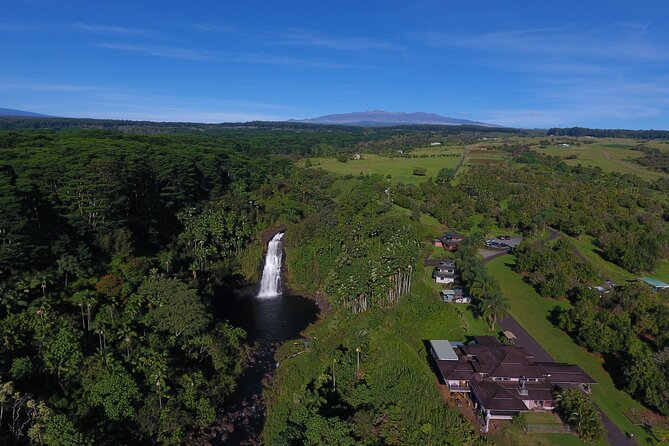
Kulaniapia Falls gives the class a stronger sense of place than a cooking lesson held in town. You can see the waterfall before or after lunch, and the farm is surrounded by tropical growth. A friendly dog may greet you on arrival, depending on the day, but that is not something to count on as part of the official activity.
The waterfall is especially useful for people who want a varied morning. You are not spending four hours indoors. The class combines walking, light farm work, food preparation, and scenery. That mix suits couples, families, solo visitors, and friends who want an activity with conversation built into it.
Families should note that the farm terrain may be uneven. The information provided does not give a minimum age or specific accessibility details, so you should check ahead if anyone in your group has mobility concerns. The small group and relaxed pace may work well for some families, but the ground and garden paths still matter.
The same setting can also make weather important. No special weather policy is provided, so ask the operator about plans for rain or changing conditions before your date. Hawaii’s tropical weather can shift, and part of the experience takes place outdoors.
Is the $169 price a good value?
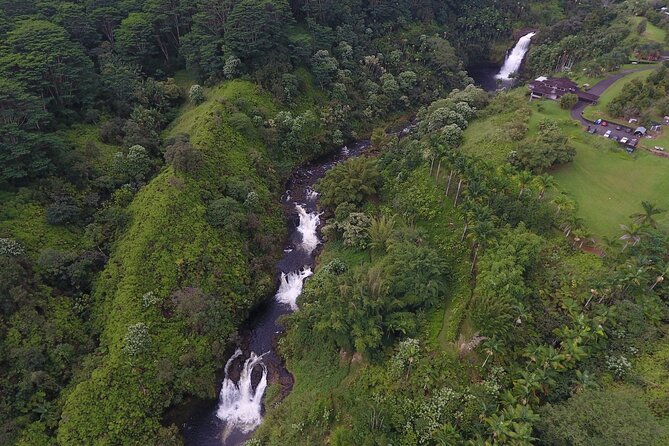
At $169 per person, this is not a bargain cooking lesson. I see the value in the full package: a four-hour activity, a guided farm walk, produce you help harvest, a prepared lunch, the use of all needed equipment, and time on the Kulaniapia Falls property.
You are also paying for a small group. With no more than eight people, the experience has a more personal feel than a large class. That can justify the price if you want direct contact with the farm and a slower morning.
The value is weaker if you measure the cost only by the meal. You could buy a plant-based lunch for less. You could also walk through a garden or visit a waterfall without paying for a cooking class. The reason to book is the combination of those pieces and the chance to understand how the ingredients move from soil to plate.
A gratuity of about $20 per person is typical and is not included. Add that to your budget. For a couple, the activity cost can become significant, but it may replace both a separate meal and another morning excursion.
Who will enjoy this class most?
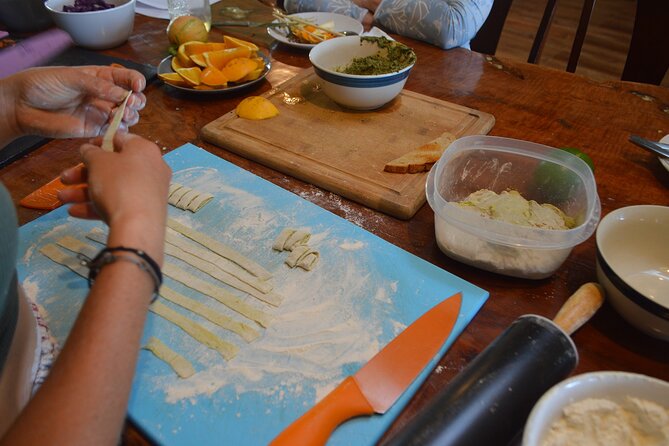
I would recommend it to anyone who likes food with a story behind it. You do not need to be an experienced cook. One of the pleasures of the class is seeing how a fresh harvest can become lunch with a few simple steps.
It also suits people who prefer a gentle activity rather than a packed sightseeing schedule. You walk and work, but this is not presented as a strenuous excursion. The relaxed pace leaves room for conversation and scenery.
Couples and friends can treat it as a shared morning. Solo visitors may find the small group easy to join. Families can enjoy the harvesting and farm animals, provided everyone is comfortable with outdoor paths and uneven ground.
I would hesitate to recommend it to a serious culinary student seeking formal instruction, advanced techniques, or a guaranteed amount of stove time. The class can be educational, but it is also social and informal. The personality and cooking style of the day’s host will shape the lesson.
Booking timing and cancellation details
This experience is often booked about 46 days ahead, so I would not leave it until the last minute if your Hilo dates are fixed. Prebooking is useful because it secures the day you want, and the eight-person limit can make popular dates fill faster.
You receive confirmation at booking, and the ticket is mobile. The activity is offered in English. It starts and ends at 100 Kulaniapia Drive, with no separate end point.
Free cancellation is available if you cancel at least 24 hours before the 9:30 am start time. Changes or cancellations inside that window are not accepted for a refund. If the minimum number of participants is not reached and the class is canceled, you are offered another date or experience, or a full refund.
FAQ
Where does the cooking class meet?
The class meets at 100 Kulaniapia Drive, Hilo, Hawaii 96720.
What time does the experience start?
The activity starts at 9:30 am and lasts about four hours.
Where does the activity end?
It ends back at the meeting point at Kulaniapia Farms.
How many people can join the class?
The maximum group size is eight people.
What food will I prepare?
You will prepare a plant-based lunch using seasonal farm produce. More than 90 percent of the meal is expected to come from the farm, including ingredients you help harvest.
Do I need to bring cooking or harvesting equipment?
No. The farm provides what you need to harvest and prepare the meal.
What happens if I need to cancel?
You can receive a full refund if you cancel at least 24 hours before the start time. Cancellations or changes made less than 24 hours before the start are not refunded or accepted.
Should you book the Kulaniapia Falls cooking class?
I would book this if you want a slower, more personal Big Island morning built around food, gardens, and scenery. The strongest reasons are the small group, the chance to harvest your own ingredients, the waterfall setting, and a lunch made mostly from the farm’s produce.
Go in expecting a relaxed farm experience, not a formal culinary course. You may do plenty of preparation but less of the final cooking, and the exact menu and teaching style can change with the season and the host. Wear closed-toe shoes, budget for the usual $20 gratuity, and reserve well ahead if your dates are limited. For the right kind of food-minded visitor, this is a thoughtful way to connect a Hilo meal with the place that produced it.
More Workshops and Classes in Big Island
- Minca: Hidden Waterfall + Coffee and Cocoa Workshop
★ 4.9 · 6 reviews
Newest waterfall trips we have reviewed in Big Island
- Volcano Adventure Tour & Waterfall – Shore Excursion from Hilo Harbor★ 4.0 · 10 reviews
- Volcano, Chocolate and Waterfalls of the Big Island★ 5.0 · 238 reviews
- Waterfall Rappelling at Kulaniapia Falls: 120 Foot Drop, 15 Minutes from Hilo★ 5.0 · 80 reviews
- Hilo-6 Hour Private Tour-Volcanoes NP, Rainbow Falls and more.★ 5.0 · 16 reviews
- Umauma Falls 4-Line Zipline Experience★ 4.5 · 52 reviews
- Private Hilo Shore Excursion to Volcano Waterfall and Black Sand★ 5.0 · 9 reviews
- Historic Hilo Bay Waterfalls by Kayak★ 4.5 · 12 reviews
- Private Big Island Tour: Coffee, Beaches, Volcanos, Waterfalls★ 5.0 · 54 reviews
Farms, compared.
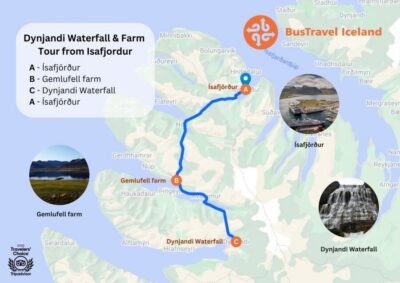
Isafjordur: Dynjandi Waterfall Tour and Icelandic Farm Visit
Read our review →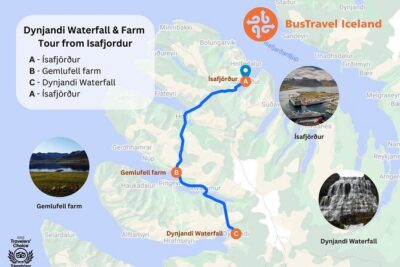
Dynjandi Waterfall & Iceland Farm Visit Tour
Read our review →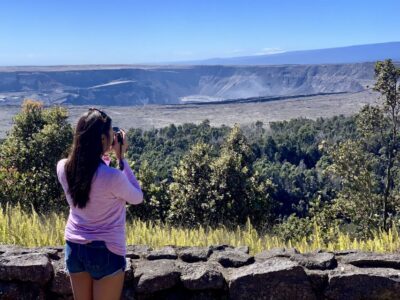
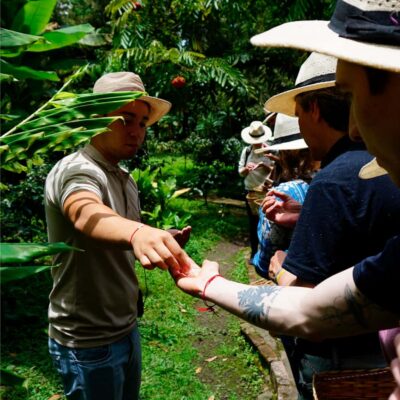
From Bogotá: Coffee Farm and Tequendama Falls Tour
Read our review →
Incredible Islands Tour – Horizontal Falls & Cygnet Bay Pearl Farm
Read our review →
Arusha or Moshi : Hot Spring, Waterfall & Coffee Farm Tour
Read our review →
Boti Falls, Umbrella Rock, Aburi Gardens & Cocoa Farm Tour
Read our review →
Trekking Tour to Hidden Waterfall & Sturgeon Farm for dog-lovers
Read our review →Browse the lists this tour appears in