
Review · CHIANG MAI WATERFALL TOURS
From Chiang Mai: Mae Taeng Valley and Waterfalls Cycle Tour
Mae Taeng Valley gives you something Chiang Mai’s city tours often miss: a slow look at working countryside. You cycle quiet roads and narrow trails past rice fields, fruit and vegetable plots, villages, and farms, with stops that explain how the area works. The finale is wonderfully odd: at Bua Thong Sticky Waterfalls, you can walk and climb on the limestone streambed without sliding around.
I like the small group of up to 12 and the guides’ flexible approach. Guides such as Three, Tri, and Nonny have been praised for explaining farming, Buddhism, plants, and village life in clear English. I also like the sensible pairing of a gentle ride with a cooling waterfall stop. The main caution is fitness: 20 to 25 kilometers is mostly flat, but narrow forest trails, heat, and one steep downhill section make this more than a casual spin around a park.
Key points to know before booking
- A real countryside ride: You travel on quiet back roads and trails rather than spending the day on major roads.
- A useful farming lesson: Stops cover rice cultivation and the crops grown around Mae Taeng, including bananas, peanuts, squash, and corn.
- Wat Ban Den adds cultural depth: The ornate temple is more than a quick photo stop, with time to study its detailed buildings.
- Lunch is part of the value: A Thai set meal, seasonal fruit, snacks, and water are included.
- Sticky Falls is an unusual finale: Bua Thong’s grippy limestone lets you climb sections of the waterfall.
- Mostly flat does not mean effortless: Bring cycling clothes, sunscreen, insect repellent, and a reasonable level of fitness.
Why this Mae Taeng cycling day works
At $73 per person, this is not the cheapest way to see the countryside around Chiang Mai. It is a solid value if you want transport, equipment, guiding, food, and two distinct activities in one day.
The day runs for about 450 minutes, including the drive from Chiang Mai. You are not simply renting a bicycle and following a road. Your guide handles the route, explains what you are seeing, provides water and snacks, and adjusts the pace or route when possible. That matters in rural Thailand, where a good guide can turn an attractive ride into a useful cultural experience.
The strongest part is the mix. You get farms and village roads in the morning, a detailed temple, a proper Thai lunch, then time at a waterfall. If you only want to pedal, the afternoon ride is available. If the heat has caught up with you, you can transfer by vehicle to Bua Thong instead.
More Waterfall Tours in Chiang Mai:
- Chiang Mai: Elephant Sanctuary, Waterfall & Bamboo Rafting
★ 4.9 · 9,160 reviews - Chiang Mai: Elephant Sanctuary & Waterfall Group Tour
★ 4.9 · 5,780 reviews - Chiang Mai: Elephant Sanctuary, Long Neck & Sticky Waterfall
★ 4.9 · 2,262 reviews
The morning transfer from Chiang Mai
Pickup is included from your Chiang Mai hotel. Be ready in the lobby or outside the entrance 10 minutes before departure, looking for a driver with an Active Thailand signboard. The first van ride takes about an hour, and some accounts put the total morning transfer closer to 75 minutes, depending on the pickup route.
That drive is part of the trade-off. Mae Taeng Valley is far enough from central Chiang Mai that you lose some time in transit, but the distance is exactly why the ride feels different from an urban cycling outing. You leave the city behind and reach a quieter area of fields, villages, and wooded tracks.
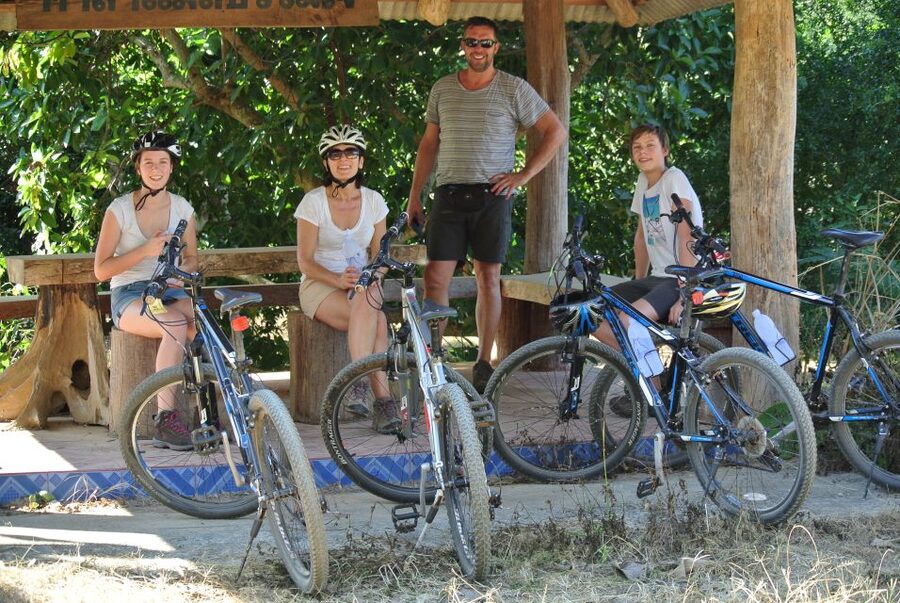
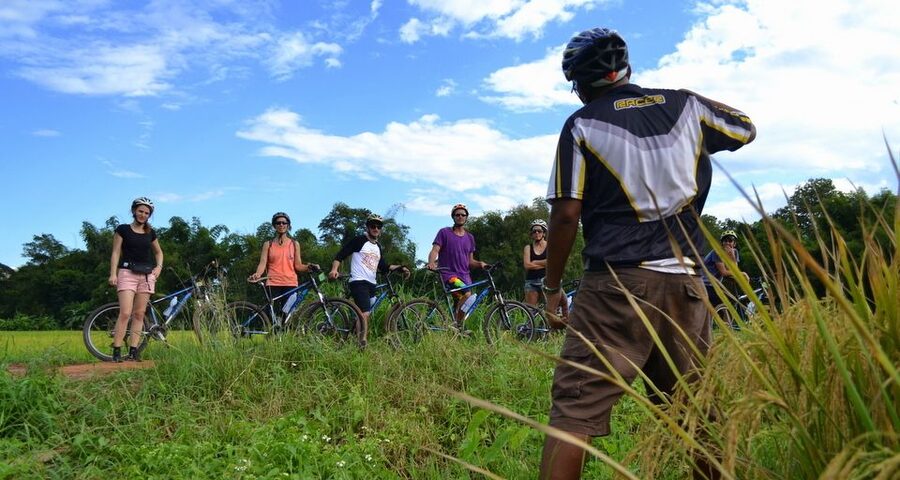
Once you arrive, the guide gives a trip briefing and fits you with a mountain bike and helmet. Take a moment to speak up about saddle height, brakes, and shifting before setting off. One rider found the bikes adequate but felt the brakes and gears needed tuning, while other riders found the equipment well maintained. A gel seat cover may be available, but comfortable cycling clothing is still a smart choice.
Pedaling through Mae Taeng Valley
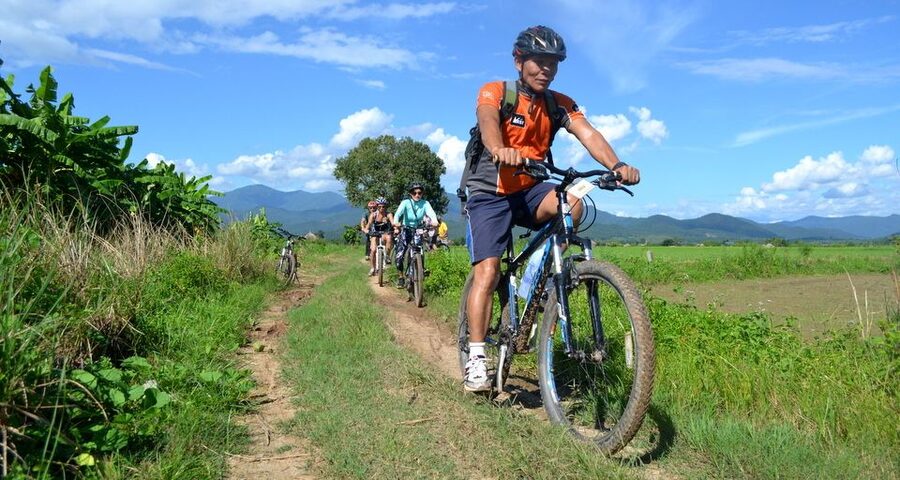
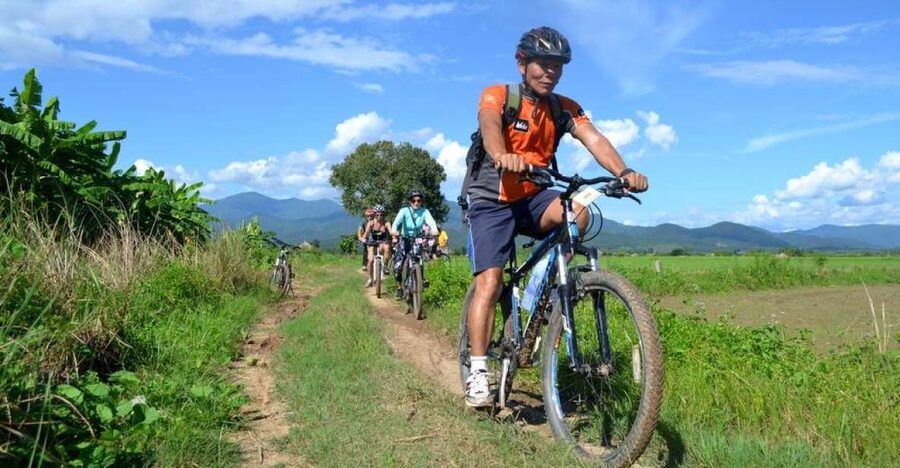
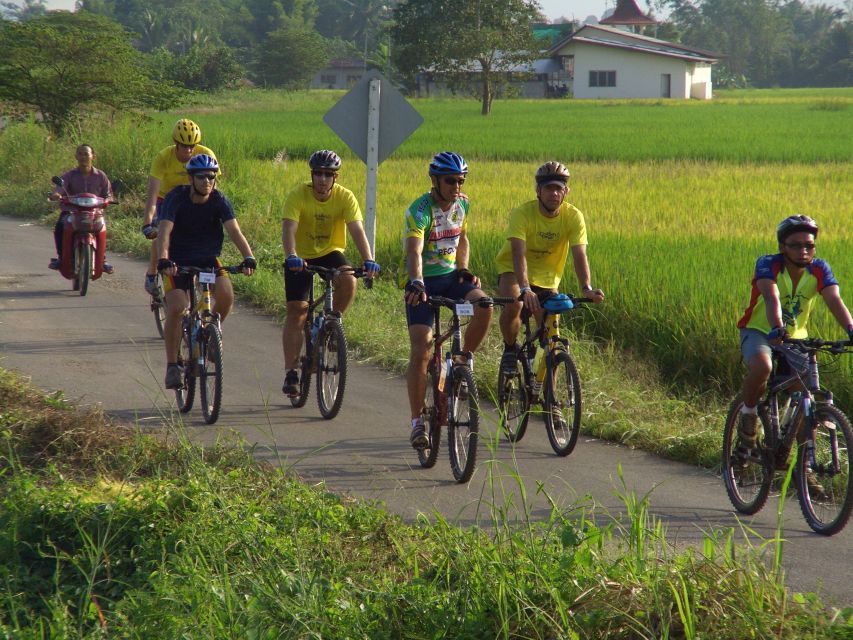
The ride covers roughly 20 to 25 kilometers. Most of it is flat and leisurely, with the route using country roads, back roads, and some narrower paths through forest. This is not a technical mountain-bike outing, but the word mountain bike refers to the equipment and route variety, not a day of steep climbs.
The scenery changes often enough to keep the ride interesting. You may pass rice fields, banana plants, corn, peanuts, squash, and other crops. Farmers are working around you, and the guide explains what is being grown and how rice cultivation fits into local life. That direct connection with working farms is the tour’s main strength.
The route can feel more demanding than the description suggests if you are unused to cycling in heat. A steep downhill section has been noted, and narrow forest tracks require more care than a smooth paved road. In rainy season, mud can add another layer of effort. The ride remains manageable for a fit cyclist, but this is not a good choice if you rarely ride or cannot comfortably cycle for several hours.
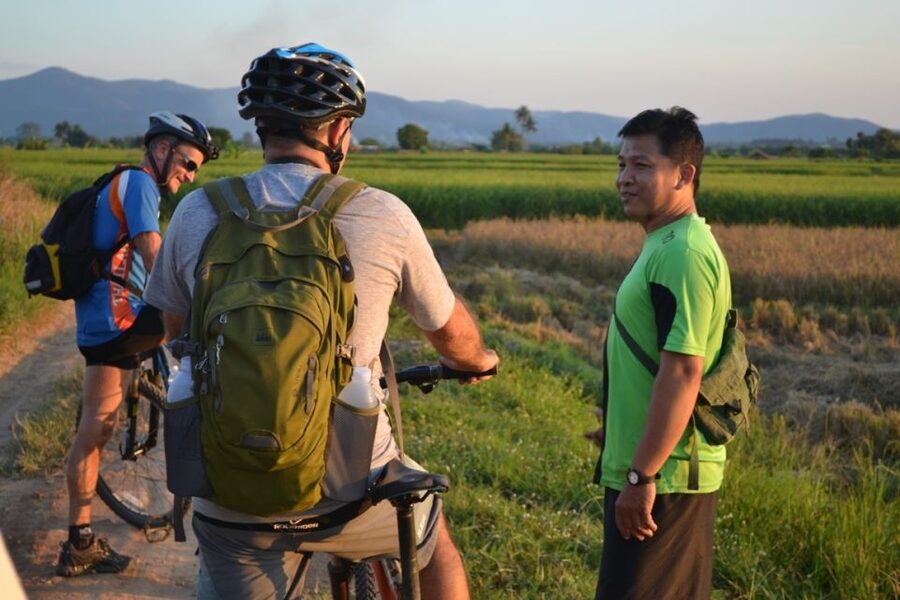
Stops break up the distance. Water and snacks are provided, and the guide can use these pauses to explain plants, crops, village activities, or local customs. Guides named Three, Tri, Nonny, Birdy, Suwon, and Georgios have all been associated with warm, informative days, though your guide will depend on the departure.
The best guides do not flood you with facts. They point out what is happening in front of you, answer questions, and make room for the quiet parts of the ride. That is useful here because the attraction is not one famous viewpoint. It is the steady change from farm to village to temple to forest path.
Wat Ban Den and the cultural stop
Wat Ban Den is one of the visual high points of the day. The temple complex is known for its ornate architecture and careful decorative detail, so allow yourself time to look beyond the first photograph. You will see a place of worship that feels quite different from the rice fields and small roads outside its gates.
The stop also gives the guide a natural opening to talk about Buddhism and local culture. Several guide accounts highlight explanations about religion, farming, plants, and nature, rather than a rushed visit with no context.
Temple etiquette still matters. Wear clothing that covers the shoulders and knees, or bring the recommended sarong. Sportswear is fine for the bicycle, but a respectful cover-up makes the temple visit easier. Take off your shoes where required and follow signs or your guide’s instructions.
Wat Ban Den is not presented as a long formal tour, and that is probably right for this day. The cycling remains the main activity. Still, the temple gives the route a useful cultural anchor, preventing the morning from becoming only a ride through attractive countryside.
Same region, a different set of falls:
- Doi Inthanon Waterfall and Royal Project Chiang Mai
★ 5.0 · 1,735 reviews - Chiang Mai: Sticky Waterfall & Angel Waterfall Park Day Tour
★ 4.8 · 1,371 reviews - Chiang Mai: Bua Thong Sticky Waterfall & Huge Cave & Buffet
★ 4.8 · 1,049 reviews - Chiang Mai Elephant Sanctuary, Bamboo Rafting and Waterfall Tour
★ 5.0 · 870 reviews
Thai lunch in a tropical garden
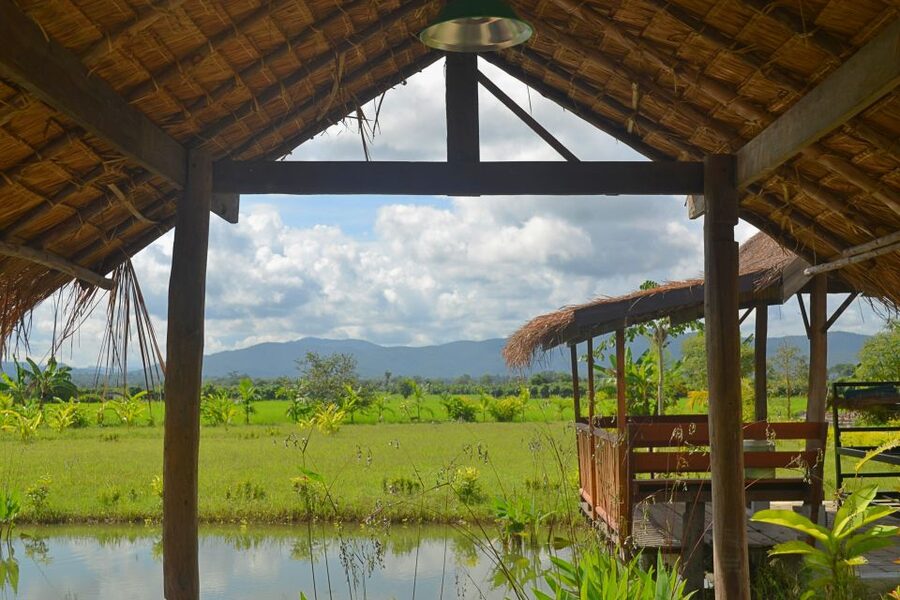
Lunch is served at a local restaurant, with the wider setting described as a tropical garden or lodge. The included meal is a Thai set lunch, and past menus have included khao soi, the northern Thai noodle dish. Seasonal fruit is also included, along with the snacks and water provided during the ride.
This is one place where the $73 price makes more sense. A separate bike rental, long-distance transfer, guide, temple stop, lunch, and waterfall visit would take planning and would not necessarily cost less. You also avoid having to search for food while tired and hot.
Portions have been described as generous, and the food has received consistently strong praise. Extra food and drinks are not included, so carry some spending money if you want anything beyond the supplied meal and water.
Lunch lasts about an hour. That pause is important physically, not just gastronomically. The ride may feel easy on paper, but heat and sun add up. Eat, refill, and use the break to decide how much more riding you want before the waterfall.
Choosing more cycling or a waterfall transfer
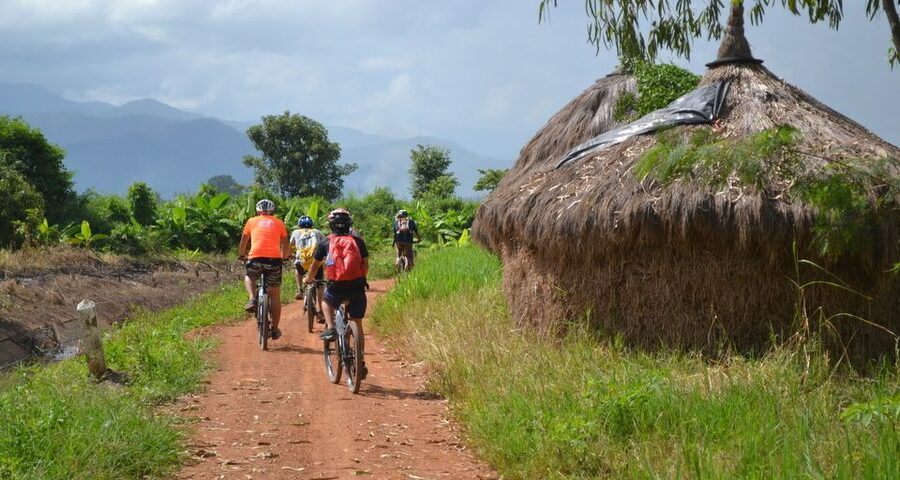
After lunch, you can either continue by bicycle on roads that wind through the valley or take a vehicle to Bua Thong Sticky Waterfalls. The choice makes the tour more adaptable than a fixed cycling route.
Choose more riding if you still have energy and want a fuller look at rural Mae Taeng. The extra cycling extends the countryside experience and may suit stronger riders who feel the morning ended too soon. One rider felt the bicycle portion could have been longer, so the optional continuation will matter if you want the bike ride to be the main event.
Choose the vehicle transfer if the heat is heavy, your legs are tired, or you want to save energy for the waterfall. This is not a failure to complete the tour. The waterfall is a planned part of the day, and the transfer lets you enjoy it without turning the final hours into a slog.
Bua Thong Sticky Waterfalls
Bua Thong, often called the Sticky Waterfalls, is an unusual place to finish. The limestone surface provides grip, allowing you to walk and climb parts of the falling water with much less slipping than you would expect at a typical waterfall.
You get about an hour for a break, visit, and swimming. Bring swimwear, a towel if you have room, and sports shoes with useful grip. A sarong can help with changing or covering up, and a small daypack is better than a suitcase.
The waterfall is especially welcome during Thailand’s hot season. After a warm ride, cool water and the chance to move around in the stream make a better ending than another roadside stop. Take care on wet sections, even though the limestone is known for its grip. Follow the guide’s advice and avoid treating every section as a climbing route.
This stop also gives the day a memorable finish. Rice farming and temple architecture are valuable, but Sticky Falls is the kind of place you will still be explaining to friends later: a waterfall you can climb because the rock feels almost adhesive underfoot.
Transport, group size, and practical comfort
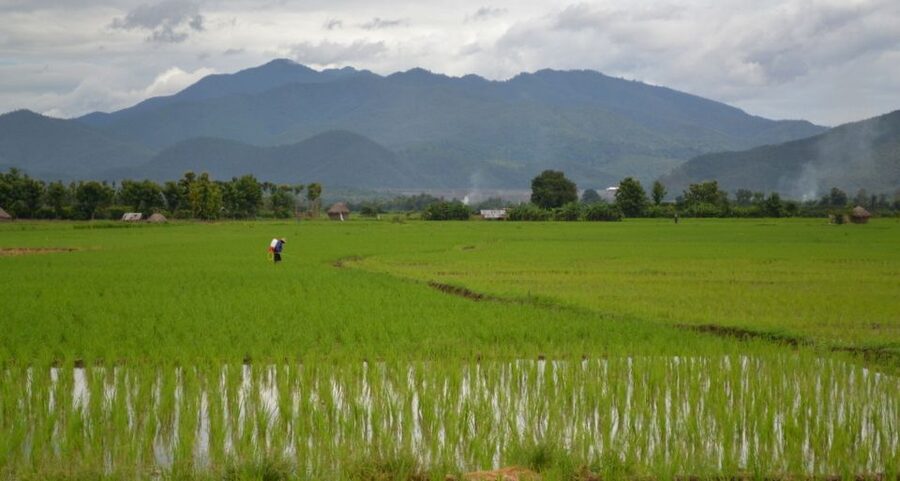
The group is limited to 12 people, which is small enough for the guide to watch the pace and answer questions. It also means your experience depends a little on the mix of riders. A group with strong cyclists may move more quickly, while a mixed group will usually keep the pace comfortable.
Hotel pickup and drop-off simplify the logistics. The return van takes about 70 minutes after the waterfall, so expect to reach Chiang Mai in the evening. Do not schedule a tight dinner reservation or airport transfer immediately afterward.
Pack light. Large bags and luggage are not allowed. A small daypack is suitable for sunscreen, insect repellent, sunglasses, swimwear, a sarong, and extra personal items. Wear sports shoes and cycling clothing, and bring sunscreen even if the morning begins cloudy.
The tour operates in English with a live guide. The guide’s personal style matters here because the value comes from explanation and route management, not only from the scenery. Names associated with particularly strong guiding include Three, Tri, Nonny, Birdy, Suwon, and Georgios.
Who should book this tour
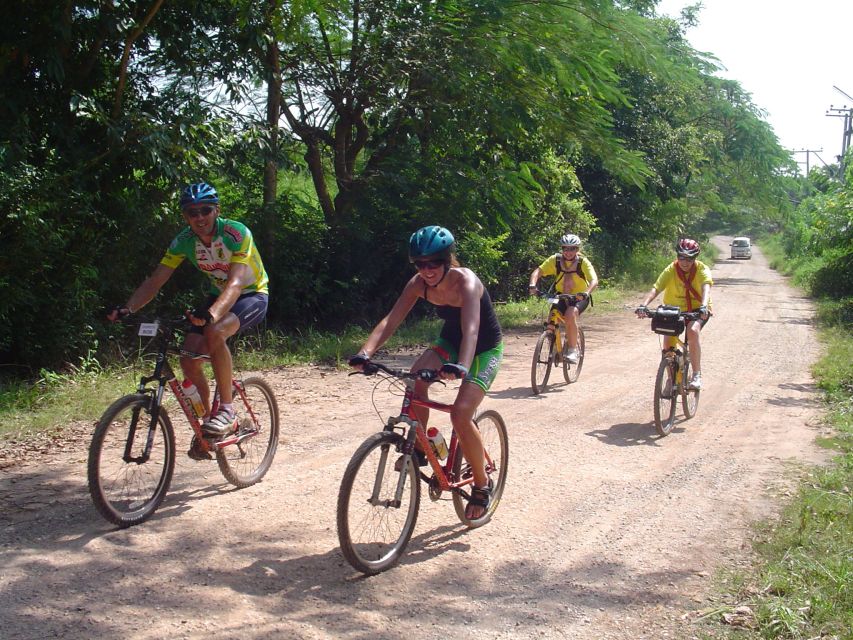
I would choose this day if you want to see rural northern Thailand without committing to a hard mountain ride. It suits reasonably fit adults, couples, active families with suitable cycling experience, and anyone who prefers a small group to a large coach tour.
It is also a good choice for a second or third day in Chiang Mai, after you have seen the city temples and want farms, village roads, and open countryside. The combination of bike, temple, lunch, and waterfall gives you more range than a simple half-day ride.
I would not book it for someone who cannot ride a bicycle, has a low level of fitness, or expects a completely smooth paved route. It is mostly flat, but that does not remove the need for balance, stamina, and confidence on narrow paths. If you dislike heat, plan to use the vehicle transfer after lunch and treat the waterfall as the reward.
The biggest value comes from the guide. You could perhaps find a rural road and a waterfall independently, but you would miss much of the context about rice farming and local crops. The guide also removes the problem of arranging bikes, transport, food, and the return trip.
Should you book the Mae Taeng Valley cycle tour?
Book it if your idea of a good Chiang Mai day includes gentle exercise, working farms, a striking temple, Thai food, and a swim at a very unusual waterfall. At $73, the package is fairly priced because it includes hotel transport, bike, helmet, guide, snacks, water, lunch, and the waterfall visit.
Think twice if you want a serious mountain-bike challenge or a short, low-effort sightseeing trip. The route is mainly flat but covers a meaningful distance, and the heat can make it feel harder. For the right rider, though, this is a well-balanced day outside the city, with enough activity to feel earned and enough flexibility to keep it enjoyable.
FAQ
How long does the Mae Taeng Valley cycling tour last?
The experience lasts about 450 minutes, or seven and a half hours, including transport from Chiang Mai and the return journey.
How far do you cycle?
The cycling route covers approximately 20 to 25 kilometers. It is mostly flat and is described as a leisurely ride rather than a technical mountain-bike trip.
Is hotel pickup and drop-off included?
Yes. Pickup and drop-off from Chiang Mai accommodation are included. Be ready in the lobby or at the front entrance 10 minutes before pickup.
What language does the guide speak?
The live tour guide speaks English.
What is included in the price?
The price includes hotel transfers, a tour guide, mountain bike, helmet, snacks, water, and a Thai set lunch.
Is lunch included?
Yes. A Thai set lunch is included, with seasonal fruit. Extra food and drinks are not included.
Can I skip the afternoon cycling?
Yes. After lunch, you can choose more cycling or take a vehicle transfer to Bua Thong Sticky Waterfalls.
Can I swim at Bua Thong Sticky Waterfalls?
Yes. The afternoon stop includes time for a visit and swimming. Bring swimwear, sunscreen, and suitable sports shoes.
Is the tour suitable for beginners?
You need previous cycling experience and a good level of fitness to enjoy it. The route is mostly flat, but it covers 20 to 25 kilometers and includes narrow trails and a steep downhill section.
Newest waterfall trips we have reviewed in Chiang Mai
- Trek to a Jungle Waterfall★ 5.0 · 14 reviews
- Waterfall Wanderer Doi Inthanon Hiking Tour★ 5.0 · 15 reviews
- Private tour] Perfect day! Sticky waterfall + ChiangDao Cave + Wat BandenTemple★ 4.5 · 6 reviews
- Sticky Waterfall Cycling Tour★ 5.0 · 68 reviews
- Sticky Waterfalls Private Half Day Fun Escapades★ 4.5 · 8 reviews
- ChiangMai 1DayTour:Elephant Sanctuary,king&queen pagoda,waterfall★ 5.0 · 23 reviews
- Private Tour: Bua Thong Sticky Waterfalls Tour★ 5.0 · 8 reviews
- Private Doi Suthep Temple Handicraft Center and Sticky Waterfall★ 5.0 · 9 reviews
Chiang Mai Waterfall Tours, compared.

Elephant Sanctuary, Long Neck & Sticky Waterfall
Read our review →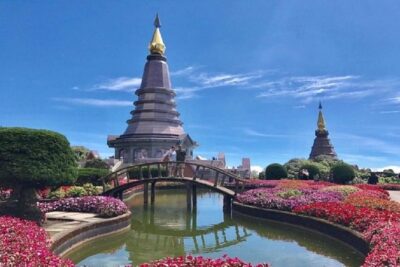
Doi Inthanon Waterfall and Royal Project Chiang Mai
Read our review →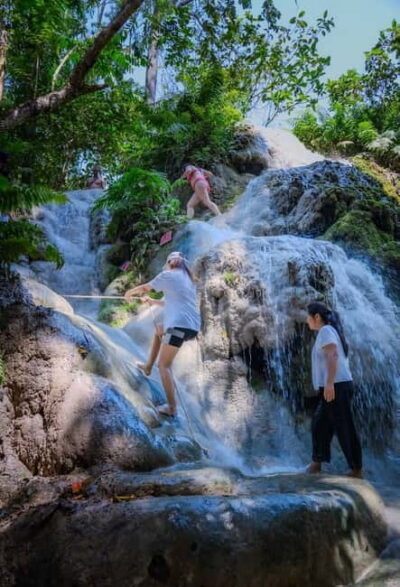
Sticky Waterfall & Angel Waterfall Park Day Tour
Read our review →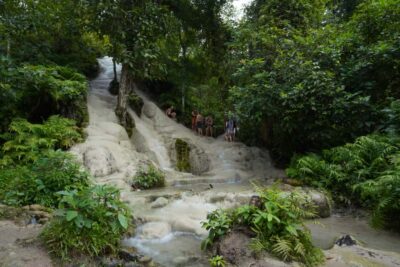
Bua Thong Sticky Waterfall & Huge Cave & Buffet
Read our review →
Chiang Mai Elephant Sanctuary, Bamboo Rafting and Waterfall Tour
Read our review →
Doi Inthanon, Waterfalls, & Tribal Villages Tour
Read our review →
Ethical Half Day Elephant Sanctuary & Waterfall
Read our review →
Doi Suthep Temple and Waterfall by Songtaew Trio
Read our review →Browse the lists this tour appears in